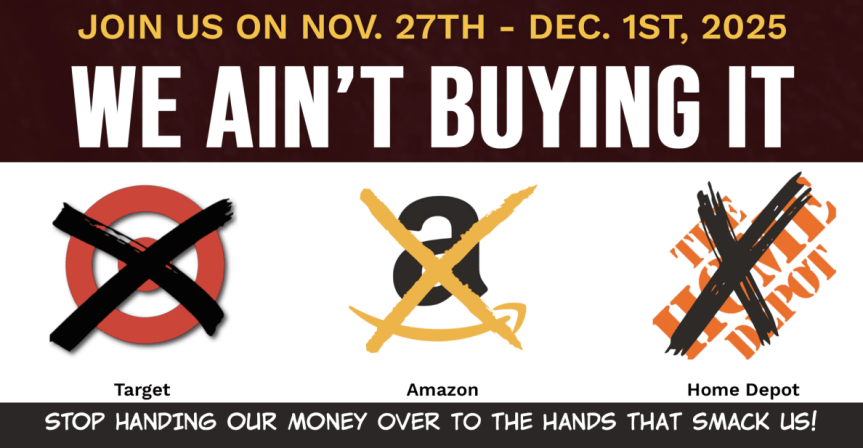
- Target caved to Trump and rolled back their diversity, equity, and inclusion policies.
- Home Depot has done nothing to protect immigrants in their stores as ICE continues to conduct violent raids on their property.
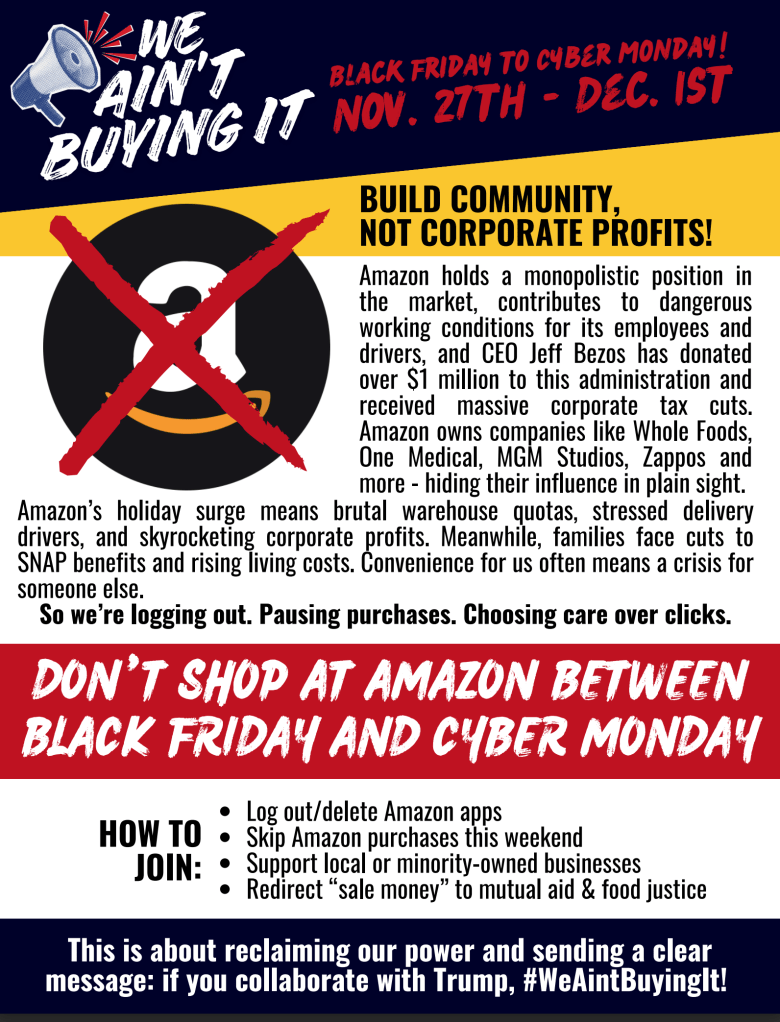
- Amazon has funded the Trump administration through donations and discounted government contracts(including for ICE), all in exchange for massive corporate tax breaks.
Thanksgiving weekend is a peak shopping time. Last year, more than 196 million Americans shopped over the holiday weekend. So it’s an opportune time to send a message to Target, Home Depot, and Amazon: if you collaborate with Trump, we won’t shop with you. They’ll be forced to take notice when they don’t get the record numbers of shoppers they’re anticipating.
Our ask is simple: Target, Home Depot, and Amazon must stop undermining our democracy by collaborating with, and enabling, the Trump administration. Reinstate their DEI policies, refuse to cooperate with ICE, and withhold funding to Trump’s authoritarian regime. (Additional action to boycott Spotify for running ads for ICE here)
How to Participate
- Full Black Out: Don’t buy anything from Target, Amazon or Home Depot stores during this week. Use the time and money to connect with those you love and rediscover what matters.
- Redirect Spending: Skip the companies undermining democracy. Shop small, local or with businesses affirming our humanity.
- These apps will help! – Goods Unite Us, Progessive Shopper
- Check out minority-owned businesses. Shop directly from the merchants where you can. Here’s a small sampling of amazing gifts available nearby and online.
- Black: BuyBlack.org, Naspora, ShopBIPOC.com, list from Good Housekeeping, Etsy Black owned businesses
- Latino: shoplatino.market, Etsy Latina-owned businesses, check out local La Catrina Folk Art, the store that was harrassed by a racist from Santa Barbara.
- Women: Etsy Women Owned Businesses (We’re liking the “Radicalized by Basic Decency” shirt!)
- LGBTQ+: Everywhere is Queer – A world-wide map of queer-owned businesses, 50+ LGBTQ-OWNED BUSINESSES YEAR-ROUND
- Native American/Indigenous Peoples: Etsy – Native American owned businesses, 30 Native-Owned Businesses to Shop in 2025, beyondbuckskin.com
- AAPI: Etsy – AAPI, 80+ AAPI-Owned Businesses to Support Now and Forever
- Rediscover your own downtown! Tourist come to our county’s cities and shop all day! (Check out Ventura’s amazing car-free Main Street Moves area. We went into almost every store handing out flyers and there are some amazing gifts to be had there for every age!)
- Look for gifts at holiday crafts festivals, along with fun things for both adults and kids to do! Here’s just a small sampling of what’s available in our county!

- Some fun/interesting/educational things to do! WE KEEP ADDING ON! – See our events page for more information! (https://indivisibleventura.org/events/)
- TUESDAY – 12/02/25 – OXNARD – Wellness classes – Soundbath w/Raising Mami Alchemy (6:30 pm) ) OPAC 800 Hobson Way, Oxnard
- THURSDAY – 12/04/25 -SANTA PAULA – LEAP LAB Vision Launch (6:00 pm – 8:00 pm) 1001 E. Main Street, Santa Paula leaplab.org
- THURSDAY – 12/O4/2025 – VIRTUAL – We are All Activists Zine Workshops (6:00 – 7:30 pm) RSVP: DM @Sharonfrancesme
- SATURDAY- 12/06/25 – VENTURA – Ventura Winter Wine Walk & Holiday Street Fair (12:00 pm – 8:00 pm) Downtown Ventura
- SATURDAY – 12/06/25 – VENTURA – Good Tidings Holiday Market (12 pm – 5:00 pm) Topa Topa Brewing Company, 4880 Colt St., Ventura
- SATURDAY- 12/05-07/25 – CAMARILLO – Camarillo Holiday Artisan Market (11:00 am – 5 pm Sat./ 12pm – 4pm Sun) Old Town, Camarillo, 2222 E. Ventura Blvd., Camarillo
- SATURDAY – 12/06/25 – CAMARILLO – Book Drive for the PVSD Middle Schools – DONATE/VOLUNTEERS NEEDED (10:00 am – 4:00 pm) 96 E. Daily Drive, Camarillo ( Next to Eggs ‘n Things)
- SATURDAY – 12/06/25 – THOUSAND OAKS – A Merry Waffle Wednesday (and new toy drive!) (5:00 – 8:00 pm) Rancho El Segundo – 1033 El Segundo Dr., Thousand Oaks
- SATURDAY – 12/06/25 – OXNARD – 18th Annual Oxnard Tamale Festival (9:00 – 6:00 pm) Plaza Park, Downtown Oxnard
- SATURDAY – 12/06/25 – OXNARD – 2025 Oxnard Christmas Parade (10:00 – 12:00 pm) 261 N 5th St., Oxnard
- SATURDAY – 12/06/25 – SANTA PAULA – Holiday Market at the Santa Paula Art Museum (10:00 – 4:00 pm) 117 N. 10th St. Santa Paula
- SATURDAY – 12/06/25 – SIMI VALLEY – ADD Presents: The People’s Block Party & Yard Sale (11:00 am – 6:00 pm) Suede Ave., Simi Valley – Park at Verde Park
- SUNDAY – 12/07/25 – VENTURA – 13th Annual Holiday Sing-a-along/Toy Drive (1 pm – 2:00 pm) Majestic Ventura Theater, 26 S Chestnut St., Ventura
- TUESDAY- 12/09/25 – OXNARD – Wellness classes – Yoga with Veronica Favela (6:30 pm) ) OPAC 800 Hobson Way, Oxnard
- WEDNESDAY – 12/10/2025 – OXNARD – Community Building – “Central Terrace – Holiday Helpers” (5:00 pm – 7:00 pm) MICOP Office 505 S A Street Mobilize: https://www.mobilize.us/mobilize/event/848819/
- WEDNESDAY – 12/10/2025 – OXNARD – Arte Del Pueblo (6:00 pm – 8:00 pm) MICOP Office 505 S A Street
- SATURDAY – 12/13/25 – VENTURA – Santa’s Workshop Craft Market (9 am – 2:00 pm) Tractor Supply Co, 2975 Johnson Drive, Ventura
- SATURDAY – 12/13/25 – VENTURA – Merry Gothmas Returns (12 pm – 7:00 pm) Ventura Co. Fairgrounds, Santa Cruz Hall https://allevents.in/ventura/merry-gothmas-returns/200029122286214
- TUESDAY- 12/16/25 – OXNARD – Wellness classes – Salsa & Bachata (6:30 pm) ) OPAC 800 Hobson Way, Oxnard
- You have people on your list who don’t want or need physical gifts? Donate in their name! ( (tinyurl.com/VC-donations))
- 805Undocufund Emergency Assistance Fund
- Friends of Fieldworkers Immigration Emergency Fund here
- Community Action Ventura County here.
- Poder Popular/LUCHA (Santa Paula) here.
- Nyland Promise: www.nyelandpromise.com/donate
- Ventura County Community Foundation – “Ventura County Neighbors Support Fund” here
- Food Bank for Farmworkers Program here
- LatinxMama – Getloudmovement (https://www.instagram.com/p/DMAKKYmuWhM/)
- Venmo: https://account.venmo.com/u/latinx_mama
- Zelle: 8052362708
- Cash.app: https://cash.app/$soyrio
- GoFundMe (see here): https://gofund.me/5649e615
- Join the Movement: Pledge to be a conscious consumer
- Use your dollars to support your community:
- Amplify: Spread the word. Share the message in conversation and online. Share this post and memes like this!
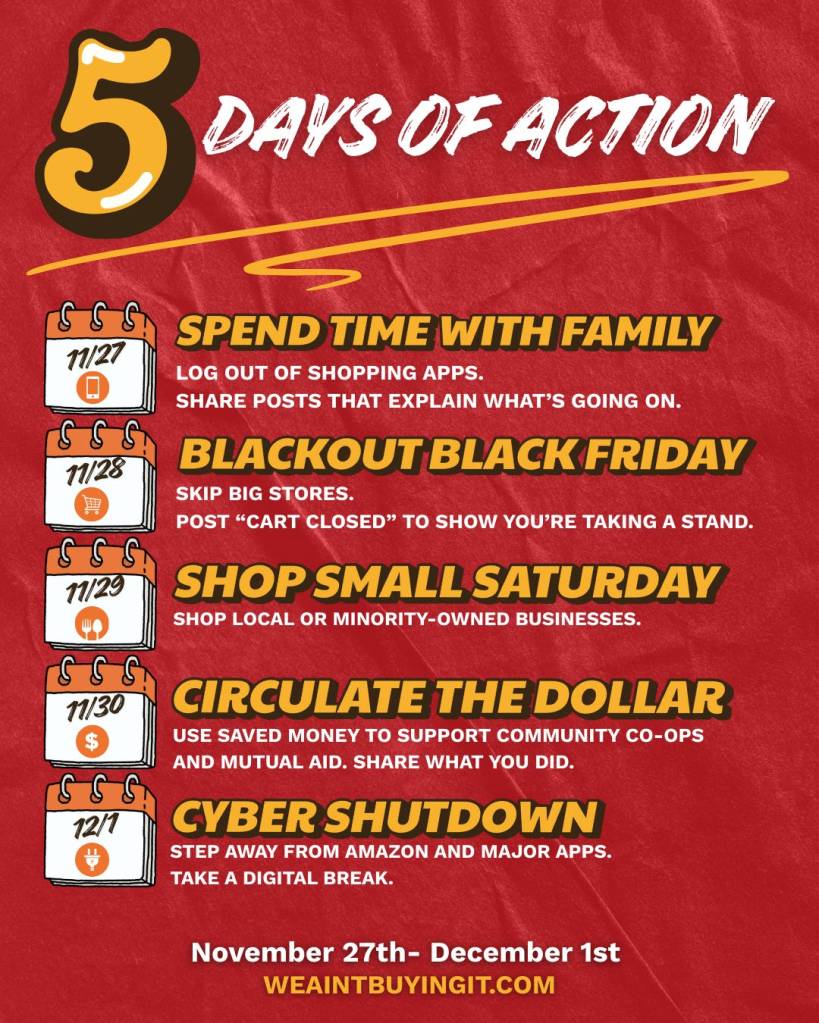
- Use and share their Toolkit: Get the word out about this economic action so we an hit the billionaires’ pockets where it hurts. (Toolkit)
- You can generate posts for various social media platforms using SoSha templates or Canva templates specifically for Instagram.
- You can find additional promotional graphics here.
Additional boycotts!
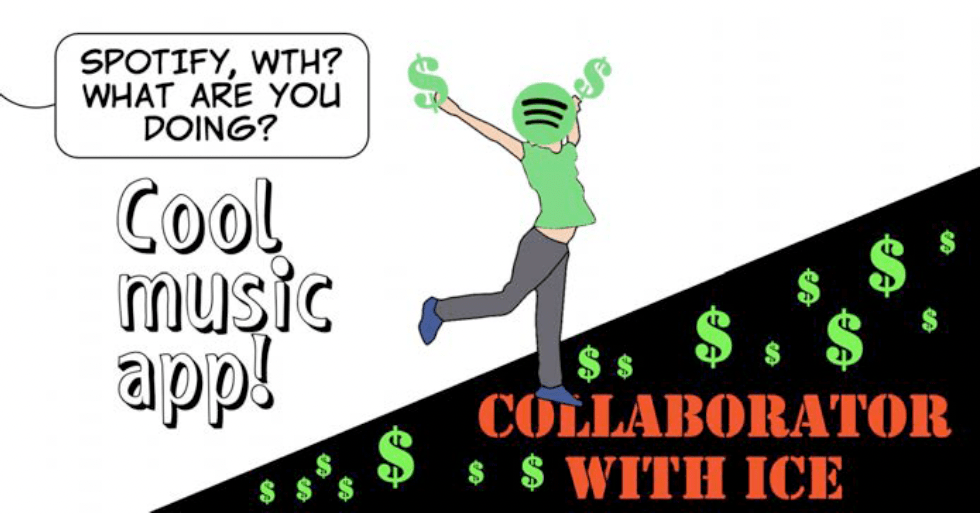
- Additional action to share with friends and family: Boycott Spotify for running ads for ICE (“Buh-Bye, Spotify!”)
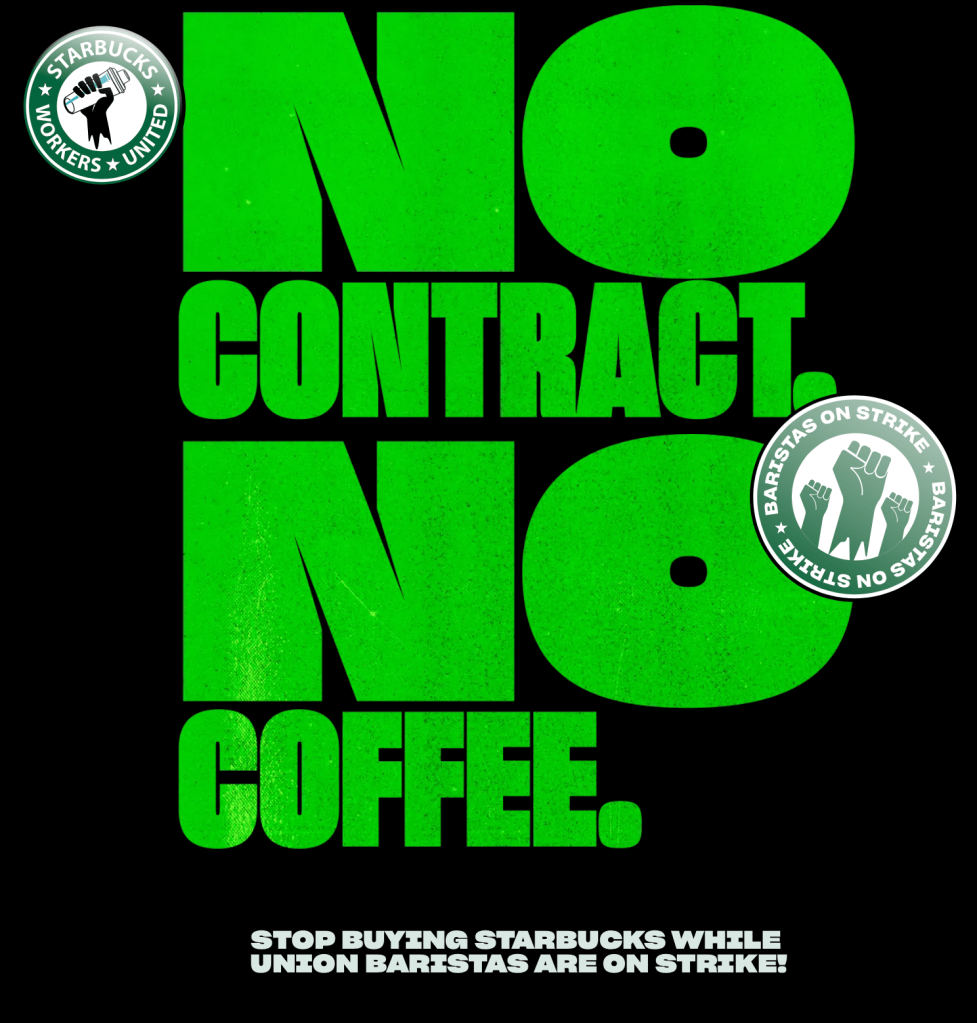
- Starbucks (https://www.nocontractnocoffee.org/)

There’s an FAQ with questions at www.tmobileboycott.org to support you in canceling your contract in the most effective and powerful way possible.
Extra Credit
- Flyers you can hand out outside their stores! (Note: ACLU rules: Be on a public sidewalk or they can ask you to leave or call the cops.)


Learn more about the power of our purse!
Organizers say the goal is to push back against corporations they argue have retreated from diversity commitments, contributed to harmful policies, or failed to protect vulnerable communities.
As co-founder LaTosha Brown put it: “From cravenly abandoning their commitments to diversity, equity and inclusion… to enabling the terrorizing of our communities… corporate collaboration must stop.”
The campaign encourages shoppers to redirect their spending toward Black-owned, minority-owned, and immigrant-owned businesses — especially during a season when consumer power is at its peak.
- Instagram: https://www.instagram.com/p/DQ7B9yMkR2t/
- The Grio: https://thegrio.com/2025/11/11/we-aint-buying-it-anti-trump-groups-call-on-economic-boycott-ahead-of-thanksgiving-weekend/
(https://www.youtube.com/shorts/kqrIgp07xGo)
“November 25, 2025 (Tuesday)
Last week, a poll conducted for Global EV Alliance, made up of electric vehicle driver associations around the world, found that 52% of Americans would avoid buying a Tesla for political reasons.
Tesla chief executive officer Elon Musk pumped more than $290 million into electing President Donald J. Trump and supporting the Republicans in 2024. After taking office, Trump named Musk to head the “Department of Government Efficiency,” a group that slashed through government programs and fired civil servants.
In response, protesters organized “Tesla Takedowns,” gathering at Tesla dealerships to urge people not to buy the vehicles. The protests spread internationally. In March, Trump advertised Teslas on the South Lawn of the White House to try to help slumping sales, to no avail.
In September, consumers flexed their muscle over parent company Disney’s suspension of Jimmy Kimmel’s late night talk show on ABC after pressure from Federal Communications Commission chair Brendan Carr over Kimmel’s comments following the murder of right-wing activist Charlie Kirk. About three million subscribers canceled Disney+ in September, while Hulu, which Disney owns, lost 4.1 million. Monthly cancellations previously had averaged 1.2 million and 1.9 million, respectively. While not all of those cancellations could be chalked up to consumer anger over Kimmel’s suspension—Disney subscription prices went up at around the same time—Kimmel was back on the air in five days.
Every day, I am struck by all the ways in which we are reliving the 1890s.
In that era too, consumers organized, using their buying power to affect politics. As the first general secretary of the National Consumers League, Florence Kelley, put it: “To live means to buy, to buy means to have power, to have power means to have responsibility.”
After the Civil War, an economic boom in the North combined with the loss of young men in the war to make education more accessible to young white women. By 1870, girls made up the majority of high school graduates. Fewer than 2% of college-age Americans went to college; women made up 21% of that group. Away from the confines of home, these privileged young women studied social problems and the means of addressing them while they developed friendships with like-minded classmates.
In the mid-1880s, those women began to experiment with using their talents and newfound friendships to repair the nation’s social fabric that had been torn by urbanization and industrialization. To recreate a web of social responsibility in the growing industrial cities, young middle-class women moved into ethnic working-class neighborhoods to minister to the people living there. Jane Addams, who opened Chicago’s Hull-House with Ellen Gates Starr in 1889, rejected the idea of a nation divided by haves and have-nots. She believed that all individuals were fundamentally interconnected. “Hull-House was soberly opened on the theory that the dependence of classes on each other is reciprocal,” Addams later wrote.
The people who lived in these “settlement houses” dedicated themselves to filing down the sharp edges of industrialization, with its tenement housing, low wages, long hours, child labor, and disease, along with polluted air and water and unregulated food. They turned their education to addressing the immediate problems in front of them, collecting statistics to build a larger picture of the social costs of industrialization, and lobbying government officials and businessmen to improve the condition of workers, especially women and children.
They soon discovered a different lever for change.
In the midterm election of 1890, politicians recognized the power of women to swing the vote for or against a political party. When Republicans got shellacked, their leaders blamed women, who were increasingly the family shoppers, for urging their husbands to vote against the party that had forced through the McKinley Tariff of that year, raising tariff rates and thus raising consumer prices. Thomas Reed, the Republican speaker of the House, complained the party had been defeated by “the Shopping Woman.”
Historian Kathy Peiss notes that between 1885 and 1910, the six women’s magazines known as the “big six” were founded, including Ladies Home Journal, McCall’s, and Good Housekeeping. By 1895, advertisements were strategically placed near recipes throughout the magazines, and brand names were scattered through their stories, a recognition of women’s role as shoppers.
Increasingly, reform-minded women were turning to women’s roles as consumers to reshape American industrialism. They came to believe that the “ultimate responsibility” for poor conditions “lodge[s] in the consumer.” Leveraging the power of consumption could force employers to pay higher wages, establish better conditions, and protect workers. In 1891, Josephine Shaw Lowell, whose brother Robert Gould Shaw had commanded Black soldiers in the Massachusetts 54th in the 1863 Second Battle of Fort Wagner, helped to form the Consumer’s League of the City of New York (CLCNY), patterned after a similar English organization, to rally consumers to support better conditions for the workers who made the goods they bought.
In 1899, Lowell and Jane Addams founded the National Consumers League, with Florence Kelley at its head. The organization worked to combat child labor and poor working conditions and, in an era when milk was commonly adulterated with chalk and formaldehyde and candies were decorated with lead paint, lobbied for government regulation of food and drugs.
Today, the relationship between consumption and reform has taken on heightened meaning after the Tesla and the Disney boycotts. The day after Thanksgiving is the start of the holiday shopping season, and like their predecessors of a century ago, reformers are focusing on consumers’ power to push back on the policies of the Trump administration, launching a campaign they call “We Ain’t Buying It.” “We aren’t just consumers; we’re community builders,” their website says. “We’re driving the change we want to see, and demanding respect.”
As Joy-Ann Reid put it in an Instagram video: “Dear retailers who’ve decided you don’t like diversity, equity, and inclusion, or you really love ICE and you have no problem with them busting into your establishments to drag people away: Here’s the thing. We ain’t buying it. I mean, for real, for real, we ain’t buyin’ it.”
She explained: “We’re gonna spend our money with businesses who actually respect our dollars, respect our communities, and respect our diversity, equity, and inclusion. We are going to buy from people who respect immigrants, who respect immigrants’ rights, and respect freedom and liberty. We are going to buy from establishments that respect our right to vote and our right to live in a free society. And if you ain’t that, we ain’t buying it.”
“Let’s show them our power,” she told listeners. “Let’s show them what we can do together.”
 INDIVISIBLE VENTURA