
Part 2 – The party of Grifters, Oligarchs and Polluters would very much like to neuter the National Environmental Policy Act (NEPA), which is the regulation enacted by Nixon in 1970 that keeps them from poisoning us without consequences. (Comment Period Ends: Mar 27, 8:59 pm PDT)
(Part 1 here)
Or setting our rivers on fire…
Our new Secretary of the Interior Doug Burgum has said: “We will achieve Energy Dominance by sustainably developing our natural resources while championing clean air and clean water, protecting our most beautiful lands, and expanding outdoor recreation!
“We will treat our natural resources as national assets, which are for the benefit and use of the American people.”
Hmmm. “Resources as assets” What does that mean? And exactly whose “benefit and use?”: Here, Jim Hines of the Sierra Club gives us his second of two previews of what’s REALLY going to happen. (Here’s the first one.) (Spoiler alert: We don’t think that weakening NEPA is the same as “championing clean air and clean water.”)
Related GOP news: Another environmental bill – Clean Water Act of 1972 – dramatically cut pollution in U.S. waterways. The GOP-dominated Supreme Court just weakened the rules on the discharge of raw sewage into our water supplies. Thanks, GOP!
Greetings Activists:
When in Washington DC recently to meet with Trump Administration officials, I heard time and time again bragging by Trump Administration officials that finally America was going to get rid of NEPA (National Environmental Policy Act), the bedrock 1970 law which allows every person in our nation to become engaged in ANY AND ALL projects on ALL federal lands and waters across America. Many of us have used NEPA to stop environmentally disastrous projects such as dams, forest logging, oil drilling, mining and the list goes on and on.
NEPA guarantees everyone a place at the federal lands and waters projects table.
Now NEPA is in grave danger of being weakened (congress created NEPA, so only congress can repeal NEPA completely), but the Administration has proposed a complete weakening of NEPA to the point of rendering NEPA useless.
But YOU have the power to help us stop this and save NEPA. The Trump Administration wants your comments on NEPA ….so let’s give it to them in mass.
Here is the required Federal Register notice with information about the weakening and how YOU can provide public comments. Comments are due by March 27nd.
Council on Environmental Quality
90 FR 10610 – Removal of National Environmental Policy Act Implementing Regulations
Federal Register. Rules and Regulations. Interim final rule; request for comments. RIN 0331-AA10. Tuesday, February 25, 2025.
… 220 (U.S. Forest Service). Finally, any reliance on the CEQ regulations has been significantly… COUNCIL ON ENVIRONMENTAL QUALITY 40 CFR Parts 1500, 1501, 1502, 1503, 1504, 1505, 1506, 1507, and 1508 [CEQ-2025-0002] RIN 0331-AA10 Removal of National Environmental Policy Act Implementing…
PDFTEXTDETAILS
Let Trump staff know in your own words how NEPA has helped you protect our nation’s environment and that YOU want NEPA preserved because all Americans should be able to hold their federal government accountable for environmentally bad projects on federal lands and waters.
All of us, all of the time, standing up to the Trump/Musk Administration.
for the wild,
Jim
ACTION – Write a comment to the Federal Register – YES, IT IS EASY TO DO!
- Go here: https://www.federalregister.gov/documents/2025/02/25/2025-03014/removal-of-national-environmental-policy-act-implementing-regulations
- Take a moment to review other people’s responses: (https://www.regulations.gov/document/CEQ-2025-0002-0001/comment) There are some lengthy ones, and manifestos chockfull of scientific or legal references, but amongst the over 16,000 comments already posted, many are simply one or two sentences asking the new powers-that-be not to poison us or destroy our environment.
- There are no grades. Participation is key.
- Go back to the first link, and click the green “Submit Comment” button on the upper right corner. Along with your words, you can attach a file, opt to receive confirmation of your submission and a tracking number, and choose to post as an individual, an organization or anonymously.
- Comment Period Ends: Mar 27, 2025 at 11:59 PM EDT (8:59 pm for us Californians)
VERY IMPORTANT!: Your comment must be UNIQUE to count!
It doesn’t have to be great literature. It just has to sound like you. Repetitive comments copy/pasted from other sources will be culled.
Deeper Dive – Resources
Know the history – it was signed by a GOP president!
“History of the National Environmental Policy Act
(https://pubs.nmsu.edu/_ritf/RITF85/index.html) “The introduction and timing of the National Environmental Policy Act (NEPA) coincided with the beginning of the U.S. environmental movement in the late 1960s. In August of 1969, Time magazine ran a photograph of the Cuyahoga River in Cleveland, Ohio, on fire …. Even though the photograph was taken in 1952, and the Cuyahoga (and many other U.S. rivers) had caught fire several times in the past, the photograph and accompanying story epitomized the sensibilities of the environmental movement at the time).
The brainchild behind NEPA was a lifelong politician named Henry “Scoop” Jackson (1912–1983), a Senator from Washington. NEPA was enacted by the 91st Congress in 1969, and signed into law by President Nixon on January 1, 1970. It is one of the shortest laws on the books, spanning fewer than six pages….
Purpose of NEPA
As written, the purpose of NEPA was as follows:
- “To declare a national policy which will encourage productive and enjoyable harmony between man and his environment;
- To promote efforts which will prevent or eliminate damage to the environment … and stimulate the health and welfare of man;
- To enrich the understanding of the ecological systems and natural resources important to the Nation; and
- To establish a Council on Environmental Quality [CEQ].” (NEPA § 2)”
…Public Involvement
“Citizens often have valuable information about places and resources that they value and the potential environmental, social, and economic effects that proposed federal actions may have on those places and resources. NEPA’s requirements provide you the means to work with the agencies so they can take your information into account.” (Council on Environmental Quality, 2007, p. 1)“]
All citizens have the opportunity to get involved in the process for all federal actions considered under NEPA. Participation may occur by attending public meetings regarding specific proposed federal actions, and commenting on draft Environmental Impact Statements and Environmental Assessments. Proposed federal actions are published in draft form in the Federal Register, where information regarding the proposed actions and decisions of the federal government is posted daily. Individuals can sign up to receive daily updates of the Federal Register Table of Contents at https://www.federalregister.gov/my/subscriptions/new.“
(ehslawinsights) “The CEQ 2025 Guidance recommends considering the following key points in revising or issuing NEPA implementation procedures, among other points:
- Reasonable Range of Alternatives: When developing an EIS, agencies should, to the extent otherwise required by applicable law, only consider a reasonable range of alternatives to the proposed action that are technically and economically feasible and that meet the purpose and need for the proposed action. The consideration of alternatives should include an analysis of any adverse environmental effects of not implementing the proposed action in the case of a no action alternative to the extent that a no action alternative is feasible.
- Effects: Federal agencies should analyze the reasonably foreseeable effects of the proposed action consistent with section 102 of NEPA, not cumulative effects
- Federal Funding: Proposed agency actions with “no or minimal Federal funding” and “loans, loan guarantees, or other forms of financial assistance where a Federal agency does not exercise sufficient control and responsibility over the subsequent use of such financial assistance or the effect of the action” are not “major Federal actions.”
- Environmental Justice: NEPA documents should not include an environmental justice analysis, to the extent that this approach is consistent with other applicable law.”
(Scout) Hold Onto Your Hard Hats: 5 Key NEPA Takeaways for 2025
1. Revocation of CEQ’s Regulatory Authority
On January 20, 2025, President Trump issued the “Unleashing American Energy” executive order, rescinding a 1977 directive that granted the Council on Environmental Quality (CEQ) the authority to implement binding NEPA regulations. The executive order gives CEQ 30 days — until February 19, 2025 — to provide guidance on implementing NEPA without its regulations and to formally rescind the existing NEPA regulations. This deadline could bring additional clarity, but until then, federal agencies and stakeholders are left navigating a landscape of uncertainty. This abrupt change has also created significant uncertainty, especially for ongoing litigation that relied on CEQ regulations, necessitating a reevaluation of legal strategies.
What this means: Federal agencies and contractors must prepare for a period of regulatory ambiguity and adapt to a reliance on case law and agency-specific interpretations of NEPA.
2. Rescission of Environmental Justice Directives
The same executive order also revoked prior directives emphasizing environmental justice (EJ) considerations in federal decision-making. This move may lead to a reduced focus on assessing impacts on marginalized communities during environmental reviews. However, including EJ considerations can still be a strategic choice, depending on the project’s context and stakeholder expectations.
What this means: While EJ is no longer a federal priority, agencies and contractors may need to weigh project-specific factors and stakeholder interests to determine whether to include EJ analyses as part of NEPA documentation.
3. Supreme Court Reviews Scope of NEPA in Seven County Infrastructure Coalition v. Eagle County
The Supreme Court is currently reviewing Seven County Infrastructure Coalition v. Eagle County, a case that could significantly impact NEPA’s application. The decision may redefine the extent of environmental reviews required for federal projects, influencing future infrastructure developments. Fred Wagner, one of the lead counsels on the case, presented oral arguments in December 2024, and a decision is anticipated by June 2025.
At the upcoming National Association of Environmental Professionals (NAEP) Annual Conference & Training Symposium, from April 28 to May 1, 2025, I’ll be co-presenting the annual NEPA case law session led by counsel Pam Hudson, with Fred Wagner and other NEPA attorneys. We’ll break down last year’s key case law, but given the rapidly shifting landscape, this panel will likely provide valuable insights into what we might expect from future court rulings.
What this means: The Supreme Court’s decision could dramatically affect NEPA’s application, and the lack of CEQ regulations adds complexity to ongoing and future litigation. If NEPA cases can no longer rely on CEQ regulations, the legal landscape will shift to statutory language, case law, and potentially agency-specific practices. This underscores the importance of staying informed about evolving case law and ensuring NEPA documents are robust and defensible.
4. Overturning of Chevron Deference
In June 2024, the Supreme Court overturned the 40-year-old Chevron deference doctrine in Loper Bright Enterprises v. Raimondo. Previously, courts deferred to federal agencies’ reasonable interpretations of ambiguous statutes. Now, courts are expected to exercise independent judgment without deferring to agency expertise. Importantly, the recent executive order issued on January 20, 2025, does not change this holding. The Chevron decision remains the law, and agencies must ensure their regulations and policies align closely with statutory language to withstand judicial scrutiny.
What this means: Federal agencies, including the EPA, may face increased legal challenges to their regulations. While the executive order reshapes how NEPA is implemented, it does not alter the Chevron ruling, which continues to demand that agencies base their actions on clear and explicit statutory authority.
5. Increased Litigation Risks Due to Regulatory Changes
The combination of diminished CEQ authority, rescinded EJ directives, and evolving case law has created uncertainty for federal agencies and contractors. Litigation risks are likely to rise as stakeholders challenge NEPA compliance.
What this means: Proactive engagement with NEPA experts and thorough documentation are crucial to mitigate potential legal challenges in this evolving landscape.
At Scout, we understand that keeping up with these developments can be complex and dynamic. Our team is here to provide expert guidance, helping you navigate the evolving NEPA landscape with clarity and confidence. If you’d like support on your future projects or want to discuss how these changes might shape your planning, feel free to reach out to us at hello@scoutenv.com!
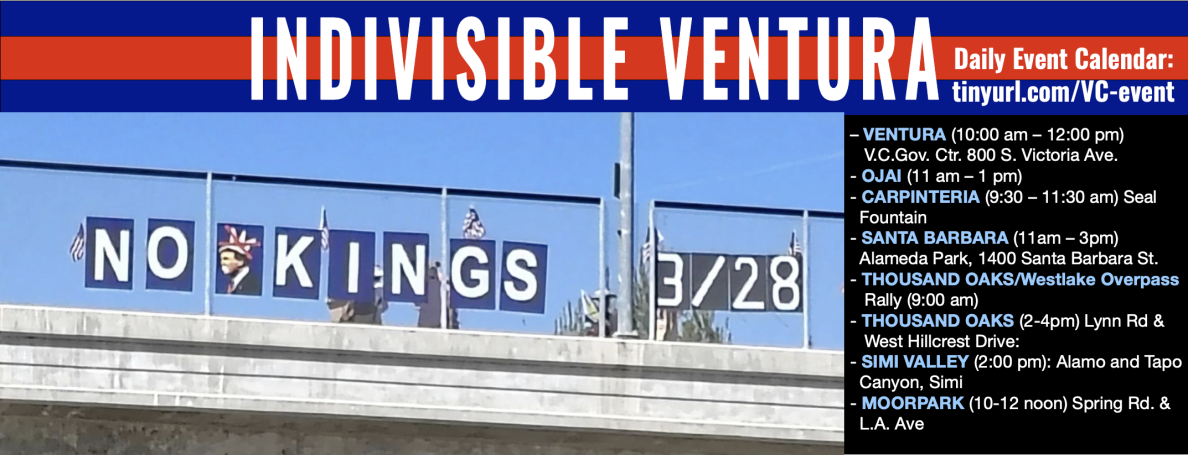
 INDIVISIBLE VENTURA