The Biden administration is trying to curb children working in construction and meat packing facilities, but the use of child labor, often by unaccompanied immigrants or the children of undocumented farmworkers, is completely legal on commercial farms and has lower minimum age limits.
More US child workers die in agriculture than in any other industry, according to a 2018 US government study. Every day, 33 children are injured while working on US farms. “Despite these dangerous conditions, agriculture is the only industry with little to no protections for the 400,000 young children who work in this industry every day.” (Check out the statistics here.)
In addition to raising the minimum working ages in agriculture, the Children’s Act for Responsible Employment and Farm Safety, or CARE Act would limit the number of hours 14 and 15-year-old children can work on school days and prohibit working before 7 a.m. or after 7 p.m. and raise the hazardous work age to 18. The legislation would exempt children working on their own families’ farms or participating in educational programs like the 4-H club.
Action: Call and email your legislators!
Minimal call script for Rep. Julia Brownley: I’m calling from [zip code] and I to thank Rep. [___] for supporting the Children’s Act for Responsible Employment and Farm Safety, or CARE Act.
Minimal call script for Rep. Salud Carbajal and our senators: I’m calling from [zip code] and I want Rep./Sen. [___] to know that we don’t consider any child’s health and education expendable. Please immediately pass the Children’s Act for Responsible Employment and Farm Safety, or CARE Act.
Minimal email script for all representative and senators: I’ve already called to ask you to support protecting kids from the dangers of agricultural work with the Children’s Act for Responsible Employment and Farm Safety, or CARE Act. However, neither the extreme poverty and legal status issues that push children into the fields, nor the hazardous conditions they and their families face have abated. Please pass fundamental immigration reform including:
- A reasonable path to citizenship for farm workers, which could include immediate green cards for farm workers.
- No E-Verify requirements for workers.
- H-2A regulations that better benefit farm workers and ensure fair wages.
- S.269 – Protect America’s Children from Toxic Pesticides Act.
Please reintroduce and/or co-sponsor the following bills that did not pass last year:
- Asuncion Valdivia Heat Illness and Fatality Prevention Act. As our climate get hotter, more farmworkers will die while trying to do their jobs. (Heat Stress Info Sheet.)
- Ban All Neurotoxic Organophosphate Pesticides From Our Food Act or the BAN OPs From Our Food Act. These pesticides are acutely neurotoxic and are literally poisoning farmworkers and their children. (One Pager on The BAN OPs Act, The BAN OPs Act Talking Points, Suggested Email Copy – English, Suggested Email Copy – Spanish (all links are pdfs).)
- Fairness for Farm Workers Act (Talking Points (pdf) and Fact Sheet (pdf).)
Contacts
Deeper Dive
A brief history of childhood labor in the U.S. by historian Heather Cox Richardson
On Monday, the World Day Against Child Labor, Democrats led by Representatives Raul Grijalva (D-AZ) and Raul Ruiz (D-CA) introduced into Congress the Children’s Act for Responsible Employment and Farm Safety, or CARE Act. It seeks to raise the minimum age for farm work from 12 to 14, repairing a carveout from the era of the Jim Crow 1930s that permitted children to work on farms at two years younger than in other sectors.
Democrats have introduced similar bills since 2005, but the measures have failed because opponents say such rules would hurt family farms. Kristi Boswell, a lobbyist for the agricultural industry and former member of the agricultural bureau under Trump, said at a hearing that her “niece and nephews would not have been able to detassel corn at ages 12 and 13, despite their parents knowing they were mature enough to handle the job.”
This bill, Ruiz notes, has exemptions for family farms. It is intended not to stop the passing of farming knowledge from parents to kids, but to protect Latinx children “who are working in the fields because they’re living in extreme poverty.”
Pressure for federal legislation to protect children is mounting, in part because of the recent effort of Republican-dominated state legislatures to weaken child labor laws. As recently as 2017 a historical review of the history of child labor from the U.S. Bureau of Labor Statistics said that “child labor like that…in the decades leading up to the passage of the [Fair Labor Standards Act] no longer exists.” But, now, thanks to a red-hot labor market that is driving up wages, immigration bans, and an influx of unaccompanied minor children who have been released to sponsors after arriving in the U.S., child labor is on the rise.
In February 2023 the Department of Labor reported that it had seen a 69% increase—note that these were only cases that were caught—in “children being employed illegally by companies.” In the same month it announced a $1.5 million settlement with Packers Sanitation Services, Inc., one of the nation’s largest food safety sanitation services providers, after officials found the company employed at least 102 children aged 13–17 during overnight shifts at thirteen meat-processing facilities in eight states, where they used hazardous chemicals and cleaned dangerous meat processing equipment. At least three got hurt.
The federal government has vowed to crack down on violations of child labor laws, but the Economic Policy Institute, which examines the economic impact of government policies, reports that in the last two years, at least fourteen states have either passed or introduced measures to weaken the laws protecting children from dangerous working conditions. They permit longer work hours and more dangerous work, lower the ages for work around alcohol, or introduce new subminimum wages for children.
Those calling for rollbacks of child labor protections say they are protecting parents’ rights from an intrusive state. They portray child labor as family oriented and good work experience. But the measures are backed—and sometimes written—by the Foundation for Government Accountability (FGA), a right-wing Florida think tank founded in 2011 whose goal is to cut the social safety net and antipoverty programs. Far-right donors who want to dismantle the federal government provide the financial support for the FGA.
David Campbell, professor of American democracy at the University of Notre Dame, told Jacob Bogage and María Luisa Paúl of the Washington Post, “When you say that a bill will allow kids to work more or under dangerous conditions, it sounds wildly unpopular…. You have to make the case that, no, this is really about parental rights, a very carefully chosen term that’s really hard to disagree with.”
A January 2022 FGA white paper provides talking points for weakened child labor laws, including the ideas that “teenagers are a critical source of labor for businesses struggling to find help” and that “with a national labor crisis and teenagers opting to join the workforce at record-high rates, cutting bureaucratic red tape can help stabilize the economy.” “THE BOTTOM LINE: States should restore decision-making to parents by eliminating youth work permits.”
This language echoes that of the early 1900s, when factories and mines employed children because they earned lower wages than adults and their small bodies could fit more easily into tight spaces, and when parents pushed their children to work because, in an era when most men made below-subsistence wages and there was no social safety net, families needed the money children earned to survive. In 1900 a quarter of the workers in the South’s textile factories were children under 16; by 1904, that number had climbed to a half, with 20,000 of them under age 12.
Factory fires and mine collapses, as well as the frequent injuries that cost children fingers or legs, brought popular attention to the dangers of child labor, but children could not vote and had no power to change legislation. Mill and mine owners lobbied legislators against regulating child labor, insisting that child labor laws would ruin their businesses by strengthening the power of unions as adult workers no longer had to worry about being undercut by cheaper child workers. And laws put children firmly under the control of their parents, who had the right to their children’s wages and who needed that income to make ends meet.
What would eventually throw a monkey wrench into this economic system was the recognition by Republican progressive reformers that children growing up in factories without education would never have the opportunity to become good citizens, whose education was crucial to a democracy. They would never learn to read or write, leaving them at the mercy of employers, and immigrant children caught in this system would never fully integrate into society.
Reformers worried that the nation would develop a permanent underclass that threatened the continued survival of democracy. In 1904 they organized as the National Child Labor Committee (NCLC) to work against child labor in factories. In 1906, progressive senator Albert Beveridge (R-IN) introduced a federal child labor law, using the Constitution’s Commerce Clause to ban the transport of any products mined or manufactured by children under 14.
“We cannot permit any man or corporation to stunt the bodies, minds, and souls of American children,” Beveridge said. “We cannot thus wreck the future of the American Republic.”
When Beveridge’s bill failed, the NCLC hired photographer Lewis Hine to take the now-iconic pictures of the nation’s children in the streets, mines, and factories.
In 1908, Republican president Theodore Roosevelt, who shared Beveridge’s concerns that the stunted children from the factories and mines would not grow up to become the foundation for a strong democracy, told Congress: “Child labor should be prohibited throughout the Nation.”
By 1916, Congress was ready to pass the Keating-Owen Act, a law prohibiting the shipment of goods produced by children across state lines. The Supreme Court struck it down in 1918, saying such federal legislation was unconstitutional. Congress then tried to stop child labor by levying a ten percent tax on businesses that hired children; the Supreme Court struck that down, too.
Finally, in 1938, as part of the New Deal effort to level the playing field between workers and employers, Congress passed the Fair Labor Standards Act (FLSA). It established a federal minimum wage, a 44-hour work week, and an end to work for those under 16. During his quest for the legislation, President Franklin Delano Roosevelt told Congress, “A self-supporting and self-respecting democracy can plead no justification for the existence of child labor, no economic reason for chiseling worker’s wages or stretching workers’ hours.”
By the time the FLSA passed, laws requiring children to attend school had joined with the high unemployment of the Depression years to shift the idea that children should work to the idea that they should stay in school, and worker protections and Social Security, passed in the same era, meant that parents no longer needed their children’s wages to survive.
In the years after World War II, when people in the United States were determined to stand strong against both fascism and communism, the nation embraced the idea that children should be in school rather than in factories. An education would permit them to be upwardly mobile economically, thus lessening the likelihood that they would be tempted by authoritarian leaders who promised to improve their standard of living, and it would guarantee that they would be informed citizens who would work to advance democracy.
Until recently, that idea seemed permanent.
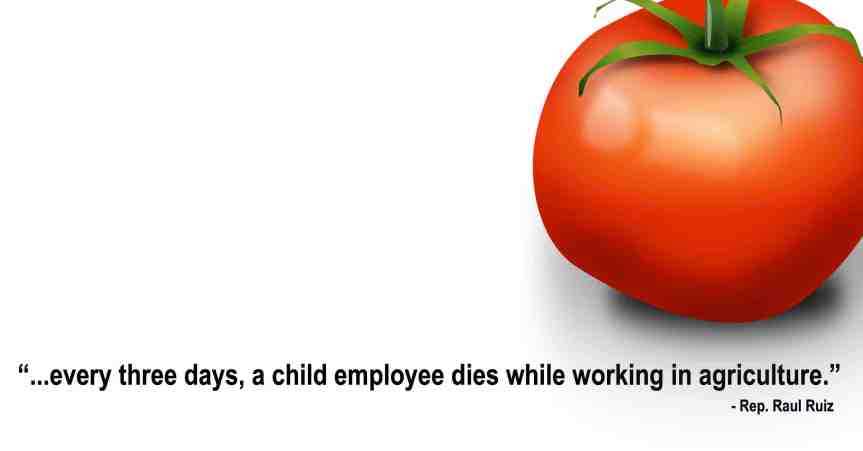
(Image by Clker-Free-Vector-Images from Pixabay)
(Quote from Fresno Bee)
 INDIVISIBLE VENTURA