Updated: Final Election results
- VOTER GUIDE QUICK LINKS: Home page
- PRESIDENT: Here
- FEDERAL: Senators, Representatives,
- STATE: Senators, Assemblymembers
- LOCAL: City Officials, School Boards, Conejo School Board, Special Districts
- PROPOSITIONS: School Bonds, Local Measures, State Propositions
- ONE ISSUE VOTING: Health care
- PROJECT 2025 CHAPTERS: Education, Labor, Health and Human Services, Centers for Medicare and Medicaid Services, Housing, Immigrants, Media Agencies, Dept. of State, Resources
Prop. 2, Prop. 3, Prop. 4, Prop. 5, Prop. 6, Prop. 32, Prop. 33, Prop. 34, Prop. 35, Prop. 36

Proposition 2 – Education Bond
(En español aquí)
- BALLOTPEDIA:
- A “yes” vote supports issuing $10 billion in bonds to fund construction and modernization of public education facilities. (LATimes) “The funding could be used to repair outdated school buildings and to upgrade libraries, heating and cooling systems and broadband internet.“
- A “no” vote opposes issuing $10 billion in bonds to fund construction and modernization of public education facilities.
 | | | |
| Yes on Proposition 2 – Community College Facility Coalition Issues Committee ($117,050.00) | Yes on Proposition 2 – Coalition for Adequate School Housing Issues Committee ($1,109,184.29) |  | |
 |  |  |  |
 |  |  |  |
 |  |  |  |
 |  |  |  |
 |  |  |  |
 |  |  |  |
 |  |  |  |
 |  |  |  |
 |  | |  |
 |  |  |  |
 |  |  |  |
 |  |  | |
|  |  | CEPS: Community for Excellent Public Schools |
 | Coalition for Adequate School Housing | Community College Facility Coalition | Community College League of California |
| Los Angeles Unified School District | Small School Districts’ Association | ||
 ebar.com |  LA Times |  |
- State Asm. Al Muratsuchi (D-66):“The bottom line is, any school bond that we place on the ballot is not going to cover the enormous needs of our K-12 schools and community colleges. But this money will help address the most urgent needs. … I am hopeful and optimistic that California voters will recognize that this is a good deal.”
- Rebeca Andrade, superintendent of Salinas City Elementary District in Monterey County: “This money is badly needed. We don’t have the money to make the basic, structural repairs that are needed at every one of our schools. Students need safe spaces to learn if they’re going to reach their full potential.”
| Top Donor and Amount | |
| DLR Group | $100,000.00 |
| Neff Construction, Inc. | $80,000.00 |
| Tilden-Coil Constructors, Inc. | $60,000.00 |
| Erickson-Hall Construction Co. | $60,000.00 |
| Murdoch, Walrath & Holmes | $50,209.93 |
 | | | |
 |
 | | | |
 |  |  | |
 | Assemblyman Bill Essayli |  |  |
 Redlands Daily Facts |  |  |  |
- Bay Area News Group Editorial Board: “California’s program for funding school construction is broken, favoring local districts that already have access to money over those that don’t. A statewide $10 billion bond measure on the Nov. 5 ballot would perpetuate the inequity and continue to leave the state vulnerable to litigation. Voters should reject Proposition 2.”
Prop. 2, Prop. 3, Prop. 4, Prop. 5, Prop. 6, Prop. 32, Prop. 33, Prop. 34, Prop. 35, Prop. 36, Top
Proposition 3 – Marriage Equality
(En español aquí)
- BALLOTPEDIA:
- A “yes” vote supports this constitutional amendment to:
- repeal Proposition 8 (2008), which defined marriage as a union between one man and one woman, and
- declare that a “right to marry is a fundamental right” in the California Constitution.
- A “no” vote opposes this constitutional amendment, thus keeping Proposition 8 (2008), which defined marriage as a union between one man and one woman, in the California Constitution.
- A “yes” vote supports this constitutional amendment to:
| | | |
| Kevin De Leon Believing in a Better California Ballot Measure Committee – Yes on Propositions 3, 32, and 33 ($50,000) | Yes on Proposition 3, Sponsored by Equality California ($1,521,055) | | |
| | | |
| | | |
| | | |
|  | |  |
| |  | |
| | | |
| | The TransLatin@ Coalition | |
 | San Francisco Women’s Political Committee |  |  |
 | |  |  |
|  |  |  |
|  | | |
| | | |
| |  | |
 |  |  | |
Los Angeles Times | Redlands Daily Facts | San Bernardino Sun |
- (LATimes) “While the constitutional clause is unenforceable, and same-sex marriage remains federally protected, proponents of the measure say it’s a necessary precaution in case of potential rulings from a conservative Supreme Court majority former President Trump helped appoint.“
- Asm. Evan Low (D-26): “California is ready for love, and these protections will protect against any future attempts to restrict marriage rights for same-sex and interracial couples.”
- Imani Rupert-Gordon, executive director of the National Center for Lesbian Rights: “Proposition 8 has been a stain on our state’s Constitution for nearly 20 years. It is long past time that we correct this injustice and remove this shameful and outdated provision from our law.”
- Gov. Gavin Newsom (D): “Same sex marriage is the law of the land and Prop. 8 has no place in our constitution. It’s time that our laws affirm marriage equality regardless of who you are or who you love. California stands with the LGBTQ+ community and their right to live freely.”
- KNOCK-LA “In 2008, California voters supported Prop 8, which defined marriage as between a man and a woman in the state constitution. This was invalidated in 2015, when the Supreme Court case Obergefell v. Hodges affirmed the right to marry under the 14th amendment.
- Now, California voters have the opportunity to enshrine the right to marry in the state constitution by voting yes on Prop 3. This proposition made its way onto the ballot with no opposing votes in the California State Senate and Assembly. It is supported by the ACLU of Northern California, Equality California, Human Rights Campaign, Planned Parenthood Affiliates of California, and the Trans Latina Coalition.
- Roughly 5% of California’s population identifies as LGBTQ+, placing California in the top five states with the highest LGBTQ+ populations. Voting yes on Prop 3 is a no-brainer for progressive voters.“
| Top Donor and Amount | |
| Federated Indians of Graton Rancheria | $1,000,000.00 |
| California Federation of Teachers COPE | $150,000.00 |
| ACLU of Northern California Issues Committee | $100,000.00 |
| California Works: Senator Toni Atkins Ballot Measure Committee | $100,000.00 |
| Planned Parenthood Advocacy Project Los Angeles | $45,900.00 |
| | | |
Uh huh. Seriously! | | | |
| | | |
| California Family Council | Rev. Tanner DiBella | The American Council of Evangelicals |
| | |
- California Capitol Connection, an alliance of independent Baptist ministers and churches: “Marriage has been defined as a union between a man and a woman from the beginning. God instituted it. … The debate about marriage is not about love or hate. It is about truth. Man cannot redefine what God has already defined.”
- California Family Council President Jonathan Keller: “In a society like ours, you never can count on what people are willing to do for legal and financial and political reasons. And ACA 5, again, eliminates any of those safeguards, and it opens up Pandora’s Box. You could have siblings getting married. You could have nephews and nieces marrying uncles and aunts. You could have, potentially even mothers and fathers marrying each other, or mothers and children, or fathers and children marrying each other.”
Prop. 2, Prop. 3, Prop. 4, Prop. 5, Prop. 6, Prop. 32, Prop. 33, Prop. 34, Prop. 35, Prop. 36, Top
Proposition 4 – Climate Bond – Parks, Environment, Energy and Water Bond Measure
(En español aquí)
- BALLOTPEDIA:
- A “yes” vote supports issuing $10 billion in bonds to fund state and local parks, environmental protection projects, water infrastructure projects, energy projects, and flood protection projects.
- A “no” vote opposes issuing $10 billion in bonds to fund state and local parks, environmental protection projects, water infrastructure projects, energy projects, and flood protection projects.





- (LATimes) “This bond measure would authorize the state to borrow $10 billion to help fund the response to climate-related disasters such as drought, flooding and extreme heat. It would also help to ensure clean drinking water. If approved by voters, it will be the largest investment in combating climate change in California history.“
- Ariana Rickard, the public policy and funding program manager for Sonoma Land Trust: “Every Californian has felt the impact of the climate crisis, whether it is wildfires, extreme heat, flooding, sea level rise. I feel like this will resonate with voters who want to protect themselves and their communities.”
- Katelyn Roedner Sutter, state director of the California Environmental Defense Fund: “We need to be not only helping communities adapt to climate change right now, but we also need to be reducing our climate pollution. This is not a problem that can wait until it’s convenient to fund in the budget.”
- Horacio Amezquita, serves on the Community Water Center Board of Directors: “It would fund grants and loans to local water agencies to help them provide safe and reliable drinking water. It would fund projects to reduce or treat contaminants in groundwater, to recharge aquifers, to build infrastructure to access clean water, to expand services to communities now poorly served, to protect and restore our rivers, lakes and streams.”
- Thousand Grandmothers: Invest in Climate Solutions! Vote “Yes” on California Proposition 4.
California officials cut billions from ambitious climate programs to offset an unexpected budget deficit. Now they hope voters approve a multibillion-dollar bond to fill the gap.
https://insideclimatenews.org/news/20092024/california-prop-4-climate-solutions/
| | | |
| |
| | | |
| | | |
| | | |
 |  | Redlands Daily Facts | https://www.sbsun.com/opinion/endorsements |
| Senate GOP leader Brian Jones | Assemblymember Jim Patterson | |
- Howard Jarvis Taxpayers Association: “These bonds will be paid by people decades from now that didn’t even get to vote for their authorization.”
- State Sen. Brian Jones (R-40): “Before approving more borrowed money, voters deserve to see results from previous investments. Bonds come with long-term financial burdens that eventually can cut into essential public services. Gov. Gavin Newsom has already declared a budget emergency due to the state’s spending outpacing revenue. California also faces a $56 billion deficit, and the addition of Prop. 4’s bond debt would only worsen the situation.”
- Mercury News & East Bay Times Editorial Board: “Proposition 4 on California’s November ballot calls for borrowing $10 billion to fund scores of environmental proposals that unfortunately are more the product of politics than good policy. Voters should reject the measure. After this year’s state budget debacle, elected leaders should not be eyeing new bonds and more debt for an unfocused spending plan.”
Prop. 2, Prop. 3, Prop. 4, Prop. 5, Prop. 6, Prop. 32, Prop. 33, Prop. 34, Prop. 35, Prop. 36, Top
Proposition 5 – Voter Approval for Affordable Housing
- BALLOTPEDIA:
- A “yes” vote supports lowering the vote threshold from 66.67% to 55% for local bond measures to fund housing projects and public infrastructure.
- A “no” vote opposes lowering the vote threshold from 66.67% to 55% for local bond measures to fund housing projects and public infrastructure.
English Fact sheet here.












- Asm. Cecilia Aguiar-Curry (D): “ACA 1 will level the playing field and create parity between school districts and cities, counties, and special districts, so that all local governments have a variable financing tool to address community needs. It also contains various transparency and accountability measures, including an expenditure plan of projects and programs proposed, audits, and monitoring by a citizens’ commission to assure resources are being spent as proposed.”
- California Professional Firefighters: “Over the last several years, various public safety-specific tax and bond measures have appeared on local ballots up and down our state and received more than 55% majority vote in support but failed to attain the existing two-thirds voter approval. For example, a parcel tax to fund fire and EMS services for Higgins Fire District in Nevada County a few years ago received 61.2% of the vote and failed. The failure of this measure forced the district to lay off six full-time positions, keep only two of the three fire stations open at a time and, as a result, response times doubled to over 12 times.”
- Jesse Arreguin, the mayor of Berkeley and vice president of the Association of Bay Area Governments: “As Californians, it is our right to tell the government how it should spend our taxpayer funds. If a majority of people believe that general obligation bonds should be issued for critical housing and infrastructure needs, then it should not be blocked by a minority. People may not always agree on everything, but our democratic system allows us to debate the best path forward and collectively implement the will of the people. Prop. 5 will give more control to the voters in how our money is spent, while making it easier to address some of the most critical issues of our time.”
- KNOCK-LA “This is basically a kludgy way to make an extremely stupid part of California’s godforsaken constitution slightly less stupid. Currently, most local government bond measures require voter approval with a two-thirds supermajority, which is insane and a terrible way to govern.
- Proposition 5 would lower the threshold to 55% — not a simple majority, mind you, because that’s too normal, but 55%, which is at least better than two-thirds. This would make it much easier for local governments to borrow money for things like affordable housing construction, local hospitals, parks, water management, and the like.
- But don’t worry, it gets stupider. To buy off the California Association of Realtors, the drafters of this measure also had to include a ban on local governments using the money raised through such bonds to buy single-family homes and convert them into affordable units.
- So, is this Proposition good? No, of course not, this is California. But is it better than what currently exists? Yes, god help us, it is. So vote for it.“
| | | |
|
| | | |
 ($1,953,601.81) ($1,953,601.81) |  ($27,000,000.00) | | |
|  | | |
| | | |
Redlands Daily Facts |  |  |  |
| | | |
- California Taxpayer Association: “More than four decades ago, prompted by years of rising taxes, Californians resoundingly approved Proposition 13 to provide a check on local governments’ taxing authority, and to ensure a greater representative voice for those who would be taxed. Proposition 13 also limits taxes on property to 1 percent of the property’s assessed value. Reducing the vote threshold would diminish the people’s voice on tax increases and would erode property tax safeguards.”
- Dr. Gary Galles, economics professor at Pepperdine University: “ACA 1 would sharply lower Proposition 13’s two-thirds voter threshold to 55% for local special taxes to fund ‘infrastructure’ so vaguely defined that virtually anything could qualify. It would open the door to massive new tax hikes to give Sacramento politicians what they want from property tax-payers without giving them their money’s worth in return.”
- Susan Shelley, vice president of communications for the Howard Jarvis Taxpayers Association: “Ultimately, Prop. 5 creates a perverse incentive for local governments to misallocate public funds. When it’s easier to borrow money, some elected officials are likely to spend existing tax revenues on everything except high-priority needs. In future years, municipal budgets could become increasingly strained as more and more revenue gets diverted to repay investors for old debt.”
| Top Donor and Amount | |
| California Assocation of Realtors Issues Mobilization PAC | $22,000,000.00 |
| National Association of Realtors | $5,000,000.00 |
| California Business Roundtable Issues PAC | $1,530,000.00 |
| California Business Properties Association Issues PAC | $120,000.00 |
| Gerald J. Marcil | $100,000.00 |
| Total Contributions | $28,953,601.81 |
Prop. 2, Prop. 3, Prop. 4, Prop. 5, Prop. 6, Prop. 32, Prop. 33, Prop. 34, Prop. 35, Prop. 36, Top
Proposition 6 – Removing Slavery from CA Constitution
(En español aquí)
- BALLOTPEDIA:
- A “yes” vote supports amending the state constitution to prohibit slavery and involuntary servitude as punishment for a crime and authorize the Department of Corrections and Rehabilitation to award credits to incarcerated persons who voluntarily participate in work assignments.
- A “no” vote opposes this amendment, thereby maintaining the constitutional provision that authorizes the use of involuntary servitude as punishment for a crime.
| | | |
| | | |
| | | |
| | | |
| | | |
| | | |
| | | |
| | | |
 | |  |  |
 | | | |
| Abolish Slavery National Network | ACLU California Action | |
| Legal Services for Prisoners with Children | | | |
| | | |
| | | |
Los Angeles Times | Bay Area Reporter | Assemblymember Lori Wilson |
- CA Highways: LAist has a good summary on this. They note “The measure aims to change the state constitution to prohibit involuntary servitude as a punishment for a crime. Prop. 6 also would prohibit state authorities from punishing incarcerated people who decline to work. It would allow incarcerated people to work to earn so-called good-time credits, which could reduce the amount of time they serve behind bars. Prop. 6 is one of 14 bills that were prioritized by the California Legislative Black Caucus as part of its reparations package — all aimed at recognizing the need to right the wrongs done to Black Californians, especially those who are descendants of enslaved people. The recommendation to end forced labor in California prisons comes out of the California Reparations Task Force. Assemblymember Lori Wilson, chair of the California Legislative Black Caucus, called for “a comprehensive approach to dismantling the legacy of slavery and systemic racism.” And Prop. 6 is seen as part of that dismantling.
- Surprisingly, there might be costs associated with this. The LAO’s notes that is because the state could end up paying people more in order to encourage them to work, increasing costs. But the state could also encourage people to work by offering more time credits, which might reduce overall prison costs.
- State Asm. Lori Wilson (D): “Involuntary servitude is an extension of slavery. There’s no room for slavery in our constitution, which should reflect our values in 2023. … ACA 8 prioritizes rehabilitation for incarcerated people. Incarcerated people should be able to choose jobs and shifts that allow them to continue their education, use the law library, get counseling, and participate in other rehabilitative programs that facilitate growth and transformation.”
- Anti-Ricidivism Coalition:“More than 94,000 Californians are currently enslaved in state prison. African Americans account for 28% of the prison population despite making up less than 6% of California’s overall population. Although no courts explicitly order forced labor as a part of criminal sentencing, it’s standard practice to force incarcerated people to perform labor.”
- KNOCK-LA “This historic proposition, if approved by voters in November, will end involuntary servitude in California. While slavery is banned in the state, involuntary servitude is allowed as punishment for crime. A similar proposition was crushed by the state legislature in 2022.
- Incarcerated people in California work in a variety of fields, including construction, yard work, cleaning, and firefighting, and are paid less than a dollar an hour for this work (with the exception of firefighters). If an able-bodied person refuses to work, the punishment can range from losing phone and visitation rights to being sent to solitary confinement.
- Proposition 6 will remove the language from the state constitution allowing involuntary servitude and additionally state that incarcerated people cannot be punished for denying work and can be awarded credits for taking work (which could potentially reduce their sentence). It would depend on city and county ordinances to determine the payscale for voluntary work.
- The proposition is supported by the ACLU of California, Abolish Slavery National Network, the California Black Legislative Caucus, and the Anti-Recidivism Coalition. If passed, it would make a significant change in the brutal conditions the thousands of people incarcerated in California currently face. Vote yes on Prop 6.“
| | | |
| | | |
- The Mercury News: “California’s prisoners should not be subjected to abuse by their jailers. But inmates should not be legally empowered to dictate what chores they’re willing to do while behind bars. That’s why voters should reject Proposition 6, a measure cloaked in language about slavery and involuntary servitude that’s really about prisoners being able to turn down work assignments.”
Prop. 2, Prop. 3, Prop. 4, Prop. 5, Prop. 6, Prop. 32, Prop. 33, Prop. 34, Prop. 35, Prop. 36, Top
Proposition 32 – $18 Minimum Wage Initiative (2024)
- BALLOTPEDIA:
- A “yes” vote supports increasing the state minimum wage to $18 per hour by 2026 for all employers and thereafter adjusting the rate annually by increases to the cost of living.
- A “no” vote opposes this ballot initiative, thereby maintaining the existing law which was designed to increase the minimum wage to $15 per hour for all employers by January 2023 and increasing it annually according to inflation.
| | | |
| Kevin De Leon Believing in a Better California Ballot Measure Committee – Yes on Propositions 3, 32, and 33 ($50,000.00) | Working Hero Action for the Living Wage Act ($10,880,602.00) | | |
| | | |
| | | |
| | ||
| | | |
| | | |
| | | |
| | | |
| | | |
 | | | |
| One Fair Wage |  | |
| | | |
| | | |
Bay Area Reporter | LA Times |
| Top Donor and Amount | |
| Joseph N. Sanberg | $10,875,000.00 |
| Total Contributions | $10,930,602.00 |
- California Highways: What this does is pretty straightforward. The issue is that the cost of living is so high in California that the current minimum wage is insufficient for a single job to provide basic food and housing. As such, workers end up homeless or on social services, even thought they are working minimum wage laws. Alternatively, they are pushed to working 3-4 jobs just to make ends meet.
- The LA Times has come out in favor of this measure. They write: “Between 11% and 17% of California’s 18 million workers would see their pay rise under Proposition 32, according to proponents. But the impact to employers and workers will be light in many of California’s big cities, which have set their own, higher minimum wages that surpass the state’s. For example, Los Angeles’ minimum wage increased to $17.28 on July 1. And some cities, such as San Francisco and West Hollywood, already exceed $18 an hour. The changes would be more significant in communities where local officials have not acted to boost wages locally. That includes lower-cost inland regions such as the Inland Empire and the Central Valley, but also some of the state’s most expensive areas, including Marin, Monterey, Orange, Santa Barbara and Santa Cruz counties where just one city — Novato — has a local minimum wage, according to a recent report by the nonpartisan Legislative Analyst’s Office. Earning a decent wage shouldn’t be a privilege afforded to people who happen to work in the right ZIP Code, and raising the state minimum wage is more equitable than a patchwork of rules for different regions and industries.”
- The real question is whether it is ethical for businesses to knowingly pay full time workers an amount that insufficient to live on? When they don’t pay a living wage, who ends up paying the cost: The taxpayers, in the form of increased social services. We also pay in terms of increased homelessness, and damage done by the unhouses. Paying an extra buck or two for a latte seems small in comparison to that. We really need to put the needs of people ahead of the need for profit. Further, this measure could have the side effect of raising wages for salaries workers. I could easily see this measure having a significant impact on the unhoused population, which could really help the overall quality of life. There are so many positive ripple effects I can see from this. It is well worth paying a buck or two more for a burger or a coffee.
| | | |
|
| | | |
| Californians Against Job Losses and Higher Prices, No on Proposition 32 ($10,000.00) | | | |
| | | |
 | |  CA Grocery Association | |
| | ||
| Redlands Daily Facts | | San Bernardino Sun |
- CalChamber President and CEO Jennifer Barrera: “If Proposition 32 is passed, Californians will see higher costs, fewer jobs and a reduction of available work hours for employees in the state. Voters need to reject this proposal because it will contribute to inflation, add to the high cost of living in California, and hurt state revenues. It will put even more pressure on our state budget.”
| Top Donor and Amount | |
| California Business PAC | $5,000.00 |
| California Restaurant Association Issues PAC | $5,000.00 |
| Total Contributions | $10,000.00 |
Prop. 2, Prop. 3, Prop. 4, Prop. 5, Prop. 6, Prop. 32, Prop. 33, Prop. 34, Prop. 35, Prop. 36, Top
Proposition 33 – Prohibit State Limitations on Local Rent Control Initiative (2024)
- BALLOTPEDIA:
- A “yes” vote supports:
- repealing the Costa-Hawkins Rental Housing Act (1995), thereby allowing cities and counties to limit rent on any housing and limit the rent for first-time tenants and
- adding language to state law to prohibit the state from limiting “the right of any city, county, or city and county to maintain, enact or expand residential rent control.”
- A “no” vote opposes repealing Costa-Hawkins Rental Housing Act, which prohibits rent control on single-family homes and houses completed after February 1, 1995.
- A “yes” vote supports:
| | | |
| Kevin De Leon Believing in a Better California Ballot Measure Committee – Yes on Propositions 3, 32, and 33 ($50,000.00) | Renters and Homeowners for Rent Control Yes on 33 ($15,741,000.77) Yes on 33 | | |
| | | |
| | | |
| | | |
| | | |
| | | |
| | | |
| California Alliance for Retired Americans | Veterans Voices | | |
| AIDS Healthcare Foundation | | | |
|  | Coalition for Economic Survival |  |
| Housing Is A Human Right | | |  |
Bay Area Reporter |
| Top Donor and Amount | |
| AIDS Healthcare Foundation | $13,346,660.73 |
| Unite Here, Local 11 | $50,000.00 |
| Kevin de Leon Believing in a Better CA Ballot Measure Committee | $5,000.00 |
| Total Contributions |
- KNOCK-LA Proposition 33 repeals Costa-Hawkins, one of the worst anti-tenant laws on the books.
- The law, passed in 1995, bans cities from applying rent control to single family homes or new construction, “new” being back-dated: in the City of Los Angeles, anything built after 1978 is exempt from rent control due to Costa-Hawkins. If your apartment was built since John Travolta appeared in Grease, your landlord can jack up the rent at will and there’s nothing the city can do to stop it. Costa-Hawkins is one of the two main laws, along with the Ellis Act, that have gutted the inventory of affordable units in California and helped drive our state’s tenant crisis. Everyday, landlords, property managers and large institutional real estate investment behemoths like Blackstone wake up and thank Costa-Hawkins for protecting their profits.
- The proposition replaces the previous law with one sentence, barring the state from limiting cities’ and counties’ right to “maintain, enact, or expand residential rent control.” Wealthy NIMBY enclaves like Huntington Beach (which have long used exclusionary zoning to maintain racial and class segregation) are hoping to weaponize this clause in bad faith in order to block new housing construction, particularly multifamily housing. We expect this ploy to fall flat in the face of the Regional Housing Needs Allocation (RHNA) – the state has been much more willing in recent years to take legal action to force these cities to build their fair share of housing – but further state action might be needed to prevent similar foolishness.
- Astute voters might be experiencing a sense of deja vu, as this is the third time in four elections they’re being asked to vote for rent control. This is because these efforts have been dominated by the AIDS Healthcare Foundation, a well-funded organization with a poor history of coalition-building that has resulted in repeated failures. Any Californian who watches television will be unsurprised to learn that Yes is being outspent 2:1 by No, and the absence of robust people power in these efforts makes a tough campaign that much harder.
- That’s especially frustrating, because expanding rent control could be a literal life-saver for millions of Californians. The ability of landlords to drive out tenants through enormous rent hikes is a major contributor to homelessness, especially given the massive shortfall in housing supply and the general lack of affordable housing. Tenants’ rights are too important to play hero ball with. You can do your part to support rent control by voting Yes on 33, and AHF can do their part by working with this state’s many powerful and inspiring tenant groups if we all have to take another shot at this in 2026 or 2028.“


- Louis Mirante, vice president of public policy at the Bay Area Council: “On paper, it would be legal to build new homes. But it would be illegal, largely speaking, to make money doing so.”
- Californians for Responsbile Housing: “It will not increase funding for affordable housing. It will not force local governments to build more affordable housing. It will not provide any immediate relief to people facing homelessness.”
- Mike Nemeth, Marketing and Communications Director for the California Apartment Association: “By repealing Costa-Hawkins, Weinstein’s so-called ‘Justice for Renters Act’ not only would empower cities and counties to impose strict rent control on all apartments and single-family homes, but it would abolish the state’s existing ban on vacancy control. Vacancy control prohibits rental housing providers from adjusting rents to market rates when a tenant moves out. Such a policy leads to property deterioration and stifled investment in housing.”
- Mercury News & East Bay Times Editorial Board: “To address California’s housing crisis and hold down rents, the state needs to add supply by incentivizing more construction. But rent control discourages investment in new housing, constraining supply and driving up overall housing costs. Which is why voters should reject Proposition 33 on the Nov. 5 statewide ballot.”
- California Highways: As noted above, the NO argument looks at the impact of Rent Control on the housing supply, the rental housing supply and such. With a mix of FUD (Fear, Uncertainty, Distrust) and reality, the NO side points out that this could be a net negative. The endorsements on the NO side are also predictable: Builders, Real Estate, Chambers of Commerce, Conservative/Republican groups, and such.
- Update: The Los Angeles Times makes a more cogent “no” argument. They note: “But Proposition 33 goes too far. It includes sweeping language that could make California’s housing shortage even worse by prohibiting the state from imposing any limits on rent controls set by cities and counties in the future. […] Instead of Proposition 33, the better option is for the Legislature to repeal or amend Costa-Hawkins so cities and counties have more flexibility to tailor local rent control laws to meet their needs — but not so much flexibility that cities could use rent control to stymie, intentionally or inadvertently, housing construction.”
- The Times’ concern is that cities may end up limiting available housing by “best abuse of the rules” : “Cities that are anti-growth and don’t want any new housing built could use their authority over rent control (diabolically) to require that developers set extremely low rent caps on new apartment buildings, which would make new multifamily housing financially unfeasible. Or a well-intentioned city trying to keep rents affordable could impose “vacancy control” when rents stay capped even after a tenant moves out, or they could put rent control on new construction.”
- This is a hard one. Rent control can be a positive thing, but should really only be needed when one is faced with the stereotypical greedy landlord that is overcharging. In an ethical world, landlords should be charging based on cost, supply and demand. But this also wouldn’t change things immediately: cities and counties would have to enact new rent control laws, and so people would still have their councilcritters and the ballot box to protect them. We’ve had some good proposals in the past that were limited in impact because of the law this overturns.
- I think we need to return the ability to impose rent control to the local jurisdictions. As such, I orginally thought: Yes. But the Times makes a good point: Limiting the ability to the legislature to do a statewide fix in the future is a bad thing. Of course, never doesn’t mean never: they could always do another constitutional amendment, but the apartment owners would fight that as well. The real question is: How likely would cities be to create abusive rent control rules. One might think this wouldn’t happen, but we’ve seen the creative ways cities use zoning to limit homelessness solutions. Sigh. The Times has convinced me to move to the No camp.
| Top Donor and Amount | |
| California Association of Realtors | $22,000,000.00 |
| California Apartment Association | $5,700,000.00 |
| National Association of Realtors | $5,000,000.00 |
| Issues PAC of Apartment Association of Greater Los Angeles | $420,000.00 |
| California Business Roundtable Issues PAC | $270,000.00 |
| Total Contributions |
Prop. 2, Prop. 3, Prop. 4, Prop. 5, Prop. 6, Prop. 32, Prop. 33, Prop. 34, Prop. 35, Prop. 36, Top

Proposition 34 – Require Certain Participants in Medi-Cal Rx Program to Spend 98% of Revenues on Patient Care Initiative (2024)
(En español aquí)
- BALLOTPEDIA:
- A “yes” vote supports:
- requiring health care providers that spent over $100 million in any 10-year period on anything other than direct patient care and operated multifamily housing with over 500 high-severity health and safety violations to spend 98% of revenues from the federal discount prescription drug program on direct patient care;
- penalizing violators of the initiative with loss of tax-exempt status and licenses to operate health insurance plans, pharmacies, and clinics; and
- permanently authorizing Medi-Cal RX in state law
- A “no” vote opposes this initiative to penalize health care providers who spend revenues from the federal discount prescription drug program on purposes other than direct patient care.
- A “yes” vote supports:
| | | |
Yes on 34, Protect Patients Now  ($14,988.624.75) ($14,988.624.75) | | | |
| |  | |
| |  | |
 |  | | |
| | |
- Protect Patients Now: “The Protect Patients Now Act will force the worst abusers of the drug discount program, like Weinstein’s [AIDS Healthcare Foundation], back to the program’s original mission to provide healthcare to low-income patients. This measure focuses only on the program’s worst offenders, putting in place new accountability measures to ensure they are appropriately using taxpayer dollars. The Act requires the program’s worst offenders like AHF and any others like it to spend 98% of their taxpayer-generated revenues on direct patient care. It also prevents them from overcharging government agencies for prescription drugs. So long as these worst offenders meet these requirements, they can continue their health care operations.”
| Top Donor and Amount | |
| California Apartment Association | $14,988,614.75 |
| Total Contributions | $14,988,614.75 |
| | | |
| | | |
| | | |
| | | |
| |
| | | |
| Stop the Revenge Initiative – No on 34 ($120,000) | | | |
 | | | |
| | |  |
 | | | |
 San Francisco Chronicle | Bay Area Reporter | LA Times | |
| Top Donor and Amount | |
| AIDS Healthcare Foundation | $120,000.00 |
| Total Contributions |
- Susie Shannon, policy director of Housing is a Human Right: “The anti-renter California Apartment Association is peddling a deceptive, unconstitutional ballot measure cleverly disguised as a patient protection bill but is, in fact, designed to hurt both patients and low-income renters. It’s a wolf in sheep’s clothing. Don’t be fooled: The Patient Protection Act targets one organization, AHF, the largest HIV/ AIDS organization in the world, and the leading organization working to expand rent control for the most vulnerable in our society – low-income seniors, veterans, single parents and patients with HIV/AIDS. CAA, which does not represent patients, has shown they are willing to deceive voters in their quest for unbridled profits for the billionaire landlord class they represent, while patients and low-income renters suffer.”
- Consumer Watchdog: “The proposed Initiative is a poorly veiled attempt by the California Apartment Association to silence a political adversary. If it is allowed to be put to the voters, no organization in the future will be safe from similar retribution by monied opponents.”
- Mercury News & East Bay Times Editorial Board: “At the same time, voters should also reject Proposition 34, a measure that can best be described as ‘Revenge of the Landlords.’ … Proposition 34 is an abusive use of the state’s initiative system to silence a political opponent. It would set a horrible precedent if it passes and survives legal challenges.”
- San Francisco Chronicle Editorial Board: “Prop 34 could also set a dangerous precedent of interest groups using the initiative process to limit other groups from doing the same. Addressing this issue will require comprehensive, nonpartisan ballot measure reform, not a slew of slanted measures targeting individual political players. Voters should reject Prop 34.”
- KNOCK-LA “This unusual proposition has a single target and simple motivation: it was written by the landlords’ and developers’ lobby in order to block political advocacy by the AIDS Healthcare Foundation, a major HIV/AIDS healthcare provider (and SYPHILIS EXPLOSION billboard producer) which in recent years has put resources behind housing-related campaigns (like Proposition 33, above). Whatever your opinion of those campaigns, there’s one clear principle: a group of ghouls like the California Apartment Association shouldn’t be able to tell nonprofits what to do with their funds. And laws shouldn’t be written to pursue grudges against any one individual organization, no matter how troublesome.”
Prop. 2, Prop. 3, Prop. 4, Prop. 5, Prop. 6, Prop. 32, Prop. 33, Prop. 34, Prop. 35, Prop. 36, Top
Proposition 35 – Permanent Funding for Medi-Cal
- BALLOTPEDIA:
- A “yes” vote supports permanently authorizing a tax on managed care organizations based on monthly enrollees, which is set to expire in 2026, and requiring revenues to be used for increased Medi-Cal programs.
- A “no” vote opposes permanently authorizing a tax on managed care organizations based on monthly enrollees, thereby allowing it to expire in 2026.
| | | |
 ($17,034,799.00) Yes on Prop 35 | |||
| | | |
| | | |
| |||
| | | |
| | | |
| | | |
| | | |
| | | |
|  | | |
| CPCA Advocates | California Hospital Association | California Primary Care Association |
| American College of Obstetricians & Gynecologists | American Academy of Pediatrics, CA. | California Dental Association | California Medical Association |
| | ||
Bay Area Reporter |
- Jodi Hicks, president and CEO of Planned Parenthood Affiliates of California: “It’s important to ensure that Californians have access to health care which is exactly what this ballot measure will help ensure. This measure will help Planned Parenthood health centers, and other community health centers, invest in workforce, expand services, and ultimately be able to serve more parents. Funding for Medi-Cal is critical for the millions of Californians who rely on the program for essential reproductive health care.”
- Donaldo Hernandez, M.D., president of the California Medical Association: “The Protect Access to Healthcare initiative will improve access to health care, reduce emergency room wait times for all Californians, make prescription drugs more affordable and expand our health care workforce. This initiative represents the most important investment in California’s health care in our state’s history and will increase access to care well into the future.”
| Top Donor and Amount | |
| Global Medical Response, Inc. | $5,000,000.00 |
| California Medical Association | $2,000,000.00 |
| California Hospitals Commee on Issues | $2,000,000.00 |
| California Dental Association | $1,000,000.00 |
| Family Health Centers of San Diego | $1,000,000.00 |
| Total Contributions | $17,034,799.00 |
| | | |
| | | |
|
| | | |
| | | See Knock-LA and CAHighway analysis below. |
League of Women Voters of CA | | | |
| | |  |
| Los Angeles Times | The Children’s Partnership |  |
- League of Women Voters of California: “Prop 35 is a well-meaning but misguided effort to try to provide more and steady funding for Medi-Cal and potentially improve reimbursement rates for medical providers. Prop 35 would change the temporary tax that helps fund Medi-Cal to a permanent tax on Managed Care Organizations (MCOs) and require the tax proceeds to be used to support only Medi-Cal and other health programs – making that money unavailable for other priorities and making it difficult to respond to future changes to Medi-Cal that might be mandated by the federal government.”
- Kiran Savage-Sangwan, executive director of California Pan-Ethnic Health Network: “As advocates for communities of color who are disproportionately harmed by health inequities, CPEHN must warn voters against Prop. 35. While we strongly support boosting access to health care providers serving our communities, Prop. 35 throws away the hard work communities have done to make health care more equitable. Care for people served by Medi-Cal now could be cut by billions of dollars, and California’s progress in expanding health care to all would be stalled or reversed. We say vote NO.”
- KNOCK-LA “This is a really technical one, so bear with us. Right now there’s a Managed Care Organization (MCO) tax that funds Medi-Cal, California’s Medicaid program, which is due to expire in 2027. Everything got knocked around by budget shortfalls recently, so Prop 35 is intended to try to lock in that tax and allocate that money for certain purposes and rate increases.
- So far so good, but the problem is that it locks in the purposes for the MCO tax revenues, and it imposes a ¾ requirement on legislative votes to change the way the revenues are used. That immediately creates issues for the 2024-25 budget – we used MCO tax money to help close the budget shortfall – and means less flexibility in the future, including around health spending priorities. It also doesn’t actually make the tax permanent, because the MCO tax requires federal approval. Instead, it requires that the state ask for the approval, and if the feds change the rules or criteria for MCO taxes then we may find ourselves needing entirely separate revenue streams.
- We’re not even getting into the particulars of the spending requirements, but in general this sort of detailed budgeting should be handled in the legislature, which can – and likely will – extend the MCO tax on its own without these problematic requirements.”
- CAHighways: So who is opposed to it? Nothing formally organized yet. Gavin Newsom says he will oppose it, because it ties his hands on how to spend the funds. Other opponents include League of Women Voters of California, California Pan-Ethnic Health Network, The Children’s Partnership, California Alliance for Retired Americans, and Courage California.
- But why is this opposed. Only the Children’s Partnership has written something up. They write: “The Children’s Partnership is grateful that the 2024-25 state budget included funding to implement the multi-year continuous Medi-Cal coverage protection for children from birth to age 5. Unfortunately, this policy – and many other programs and initiatives that support people on Medi-Cal, including a living wage rate increase for community health workers – would be rendered “inoperative” if Proposition 35 passes this November. Prop 35 directs revenue raised from the Managed Care Organization tax to fund rate increases for a limited number of Medi-Cal providers, forever limiting the Legislature’s ability to use any of those funds for other budget needs – even if those needs include other Medi-Cal supports.”
- In other words, on the medical side, the argument is that the initiative is too limiting. TCP notes “The allocation of funding under Prop 35 is decided by a few provider organizations with little voice from Medi-Cal enrollees, community members, Legislature, or other essential provider groups, such as community health workers.”
- The California Budget and Policy Center notes: “While Prop. 35 provides some flexibility for the state to structure future versions of MCO tax proposals to comply with federal regulations and ensure federal approval, it does set limits to the tax on commercial enrollment. This limitation could affect the state’s ability to secure future approval for a tax that generates the same level of revenue as the current tax. The measure also specifies that the MCO tax would not go into effect if the state does not receive federal approval and federal funding in the future. Additionally, Prop. 35 would establish rules for how MCO tax revenue would be spent in the short term (2025 and 2026) and long term (2027 and beyond). The key difference is that policymakers would no longer be able to use the bulk of the dollars to offset General Fund spending in Medi-Cal. Another notable difference is that Prop. 35 would require funds to be spent by the end of each calendar year or fiscal year, beginning 2027. Currently, policymakers have the flexibility to save funds for future years to help cover costs if the MCO tax is not approved in the future.”
- The League of Women Voters similarly doesn’t like the initiative because it is ballot box budgeting and too restrictive.
- Update: CalMatters also notes: “Right now, the Managed Care Organization Tax, also known as the MCO Tax, generates revenue for Medi-Cal by taxing health insurers that serve both Medi-Cal and commercially insured patients. The federal government gives California a dollar-for-dollar match to whatever funds are raised by the tax. For Prop. 35 that’s an estimated $7 billion to $8 billion annually through 2027. However, California has historically placed the majority of the tax burden on Medi-Cal insurers and not commercial insurers. In its letter to state officials, federal regulators said Medi-Cal plans represent 50% of all insured people but bear “99% of the total tax burden.” That is at odds with the spirit of the law, which is meant to redistribute revenue from commercial insurers to Medi-Cal plans, regulators wrote. Prop. 35 would cap the tax on commercial insurers at a minimal rate. Any attempts to modify the tax would have to go back to the ballot box or be approved by three-fourths of the Legislature. Opponents say that means federal rule changes requiring the commercial tax to be more equal to the Medi-Cal tax will force the state to reduce taxes on the Medi-Cal plans.” This explains why commercial insurers are in favor of 35: It limits their taxes.
- The Los Angeles Times has also come out against 35. They write: “But it’s also worth rejecting Proposition 35 because of what it would do. It would make permanent a temporary tax on managed healthcare insurance plans starting in 2027, and require that all of the proceeds be used on Medi-Cal services and higher reimbursement rates to specified healthcare providers. Currently, lawmakers use some of the revenue from the tax to lessen the burden of Medi-Cal program costs on the general fund. Asking voters to dictate how the state spends its revenue is ballot-box budgeting. It’s bad policy because it strips lawmakers of the ability to change state spending from year to year depending on current needs.”
- Conclusion: One of the problems with the initiative process is that we get flawed initiatives that may sound like good ideas, but in the long term are bad and overly limiting. Would we have known then what we know now on the impact of Prop. 13… So how you should move on this really depends on whether you think this is moving the needle forward in a way that overcomes its flaws, or you think the flaws impact the advancement this brings. Reading through the arguments on both sides, my gut is telling me that this particular initiative is here to benefit specific Medi-cal organizations at the expense of others, and it limits the flexibility of the legislature far too much. Conclusion. No
Proposition 36 – Drug and Theft Crime Penalties and Treatment-Mandated Felonies Initiative (2024)
- BALLOTPEDIA:
- A “yes” vote supports making changes to Proposition 47 approved in 2014, including:
- classifying certain drug offenses as treatment-mandated felonies;
- increasing penalties for certain drug crimes by increasing sentence lengths and level of crime;
- requiring courts to warn individuals convicted of distributing illegal drugs of their potential future criminal liability if they distribute deadly drugs like fentanyl, heroin, cocaine, and methamphetamine; and
- increasing sentences for theft based on the value of the property stolen.
- A “no” vote opposes this initiative that makes changes to Proposition 47 (2014), thereby maintaining certain drug and theft crimes as misdemeanors.
- A “yes” vote supports making changes to Proposition 47 approved in 2014, including:
| | | |
| | | |
| | | |
 ($8,972,835.44) ($8,972,835.44) | Californians for Safe Stores and Neighborhoods | | |
| | | |
| | California District Attorneys Association | |
| Crime Victims United of California |  | | |
 |  |  | |
|
- San Francisco Mayor London Breed: “The Homelessness, Drug Addiction, and Theft Reduction Act will make targeted but impactful changes to our laws around fentanyl and help us tackle the chronic retail theft that hurts our retailers, our workers, and our cities. I fully support this measure and know it will make a meaningful difference for cities across California.”
- Anne Marie Schubert, co-chair of the campaign committee: “We have received overwhelming response from California voters who live in every region of the state who want safer communities and laws that will hold repeat thieves accountable and mandate treatment for drug offenders. This is not a partisan issue which is why we continue to see momentum with more than 360,000 voters signing the petition to put this measure on the ballot.”
- Greg Totten, chief executive officer for the California District Attorneys Association: “We continue to see an outcry of overwhelming support from Californians of every political affiliation and geographic region across the state demanding for change that will improve community safety and hold repeat offenders of theft and serious drug crimes including those involving fentanyl accountable. Californians want to feel safe in their neighborhoods and when they shop, and this initiative amends Prop 47 to effectively hold individuals accountable for repeat crimes of theft and serious drugs like fentanyl while making sure individuals receive and complete drug and mental health treatment they need.”
| Top Donor and Amount | |
| Walmart | $2,500,000.00 |
| Target | $1,500,000.00 |
| Home Depot | $1,000,000.00 |
| California Business Roundtable Issues PAC | $370,000.00 |
| 7-Eleven | $300,000.00 |
| Total Contributions | Total Contributions |
| | | |
|
| | | |
| Committee to Protect Public Safety, No on Prop 36 ($195,000.00) | | | |
| | | |
| | | |
| | | |
| | | |
| | | |
| | | |
| | | |
| California Black Power Network | | | |
|  | Ella Baker Center Action Fund | |
| | Sister Warriors Action Fund | Vera Institute of Justice |
| Crime Survivors for Safety and Justice | Initiate Justice Action – A grassroots progressive organization led by people impacted by incarcerat | La Defensa | Legal Services for Prisoners with Children |
| Prosecutors Alliance Action | Re-Entry Providers Association of California | ||
| | ||
| | | |
Los Angeles Times | Assembly Speaker Robert Rivas | Senate President Pro Tem Mike McGuire. | Bay Area Reporter |
| Top Donor and Amount | |
| ACLU of Northern California Issues Committee | $100,000.00 |
| Quinn Delaney | $25,000.00 |
| Django Bonderman | $25,000.00 |
| Stacy H. Schusterman | $25,000.00 |
| Action for Safety and Justice | $24,826.12 |
| Total Contributions | $195,000.00 |
- Do you think someone should face more than a decade in prison for personally using drugs? If not, vote NO on Prop 36.
- Prop 36 an attempt to turn back the clock to the War On Drugs era and to fatten the budgets of state prisons and county jails, decimating the modest gains we’ve made over the past decade with reforms like 2014’s Prop 47.
- Despite California’s liberal reputation, for decades we built a brutal “tough on crime” regime that trapped tens of thousands of people in cycles of incarceration. Excessive sentences ballooned the state prison population to the point that the US Supreme Court found that California prisons themselves amounted to cruel and unusual punishment. The human cost was incalculable; the budgetary cost was absurd.
- In 2014, voters passed Prop 47, a vital reform package which included changes to the Three Strikes law and making personal possession of narcotics a misdemeanor, rather than a felony. Its reforms made our communities safer and saved hundreds of millions in taxpayer dollars by reducing prison sentences and expanding treatment-focused approaches to substance use disorders.
- It was, without exaggeration, one of the largest expansions of human freedom in this century.
- This is what Prop 36 wants to undo – backed by police and prison lobbyists, financed by huge corporations, and supported by a fearmongering media backlash to the racial justice protests of 2020. It would roll back this progress by bringing back felony charges for simple drug possession, creating new mandatory sentence enhancements for petty theft, expanding the Three Strikes Law, and clawing back millions in funds from treatment programs and other community services to fund the expansion of jails and prisons. It is an irrational proposition, cruel and destructive for the sake of being cruel and destructive.
- Not a single backer of Prop 36 will see heaven. Vote NO.
- Vera Institute of Justice: “First, Prop 36 would reverse the state’s gains in reducing the dangerous, racially unequal, and unconstitutionally crowded prison population (since 2014, California’s prison population has dropped 28 percent with reduced racial disparities). Second, it would dry up funding for much-needed services, including employment assistance for those coming out of jail, victims’ services, and housing. Finally, it risks making California less safe, as programs funded by Prop 47 have reduced recidivism without increasing violent crime.”
- Eric Harris, associate executive director of External Affairs for Disability Rights California: “Black and Latinx people, especially those with disabilities, are most likely to be disproportionately impacted by these types of terrible policies and end up in the criminal legal system. People facing poverty, homelessness, and addiction are not responsible for any suggested increases in crime and we must consider other solutions to this perceived problem.”
- Danielle Dupuy-Watson, chief executive officer of Civil Rights Corps: “Prop 36 is many things but it isn’t about public safety. It’s about punishing people that are poor and unwell. It’s a performance by politicians to keep power. It’s about putting corporate lies over human life. In fact, all evidence suggests that the consequences of Proposition 36 will make communities less safe.”
- CAHighways: The No side argues “It reignites the failed war on drugs, makes simple drug possession a felony, and wastes tens of millions of dollars on jails and prisons, while slashing crucial funding for victims, crime prevention, treatment, and rehabilitation.” They state “Prop 36 is a MAGA-Republican-led bait and switch, plain and simple. Crime victims and law enforcement leaders oppose Prop 36 because it slashes money meant for crime victims, and for mental health and rehabilitation programs that help ensure people getting out of jail or prison are less likely to reoffend. Prop 36 is a Republican-led effort to bring back to 1980s style drug war tactics that destroy families and communities and pack our state prisons without any benefit to public safety.”
- There are a large number of folks opposed to Prop 36: Democratic leaders. Civil Justice folks. ACLU. Many unions. The California Democratic Committee. Jewish Action California.
- Conclusion: I think where you come down on Prop. 36 will go closely with how you think on the LA County DA race. Are you scared crime is increasing? Do you think the answer to crime is more prison time and harsher penalties? On the other side: Do you think that as the economy and housing issues improve, and retailers understand shrink better and learn self-checkout was a failure, crime will go down? Do you think that perhaps the answer to “smash and grab” crimes is not harsher penalties, but more staff to monitor the store and have a visible deterrence presence? Could the desire to downstaff and remove the sales people from the shopping be the real reason why these crimes have increased: we’ve increased the opportunity?
- As for fentanyl: The issue is not the end drug sellers and the users. The issue is the large scale importers and manufacturers, and we already have harsh penalties for those. All the additional penalties of Prop 36 will do is increase our prison population, making things more expensive for the state.
- The Los Angeles Times makes some additional points. I wrote up my analysis independent from the LA Times.
- I understand the concerns and fears behind Prop 36, but I don’t think it is the right solution for the problem. Conclusion: No
From a Ventura County community leader!


Prop. 2, Prop. 3, Prop. 4, Prop. 5, Prop. 6, Prop. 32, Prop. 33, Prop. 34, Prop. 35, Prop. 36, Top
- VOTER GUIDE QUICK LINKS: Home page
- PRESIDENT: Here
- FEDERAL: Senators, Representatives,
- STATE: Senators, Assemblymembers
- LOCAL: City Officials, School Boards, Conejo School Board, Special Districts
- PROPOSITIONS: School Bonds, Local Measures, State Propositions
- ONE ISSUE VOTING: Health care
- PROJECT 2025 CHAPTERS: Education, Labor, Health and Human Services, Centers for Medicare and Medicaid Services, Housing, Immigrants, Media Agencies, Dept. of State, Resources
DISCLAIMER: ALTHOUGH THE DATA FOUND IN THIS BLOG/POST HAS BEEN PRODUCED AND PROCESSED FROM SOURCES BELIEVED TO BE RELIABLE, NO WARRANTY EXPRESSED OR IMPLIED CAN BE MADE REGARDING THE ACCURACY, COMPLETENESS, LEGALITY OR RELIABILITY OF ANY SUCH INFORMATION. THIS DISCLAIMER APPLIES TO ANY USES OF THE INFORMATION WHETHER ISOLATED OR AGGREGATE USES THEREOF.
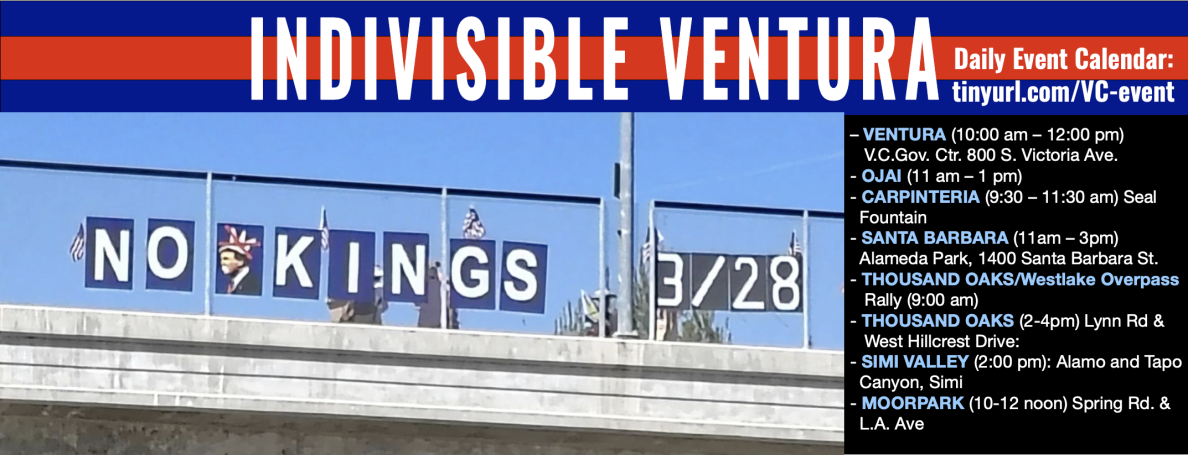
 INDIVISIBLE VENTURA