(Global Project against Hate and Extremism – GPAHE)
“Authoritarian regimes generally abolish or restrict civil liberties, concentrate political power, and impede and weaken free elections that allow for alternations of power. Authoritarian states might nominally contain democratic institutions such as political parties, legislatures, and elections, which are managed in such a way as to entrench authoritarian rule, for example gerrymandering and a restriction of social services, including education. Authoritarianism’s opposite is liberal democracy, which the bipartisan Freedom House, the oldest American institution defending global democracy, defines as encompassing much more than elections and majority rule. Liberal democracies are typified by governance based on the consent of the governed, accountable institutions, adherence to rule of law and respect for human rights. They have independent courts, an independent press, and a thriving civil society. Liberal democracies are open to changes in power, “with rival candidates or parties competing fairly to govern for the good of the public as a whole, not just themselves or those who voted for them.”
The path to authoritarianism usually first involves democratic backsliding, propelled by political figures and parties with authoritarian instincts who employ specific tactics. These factors are evident in Project 2025, which explicitly advocates politicizing independent institutions by replacing the federal bureaucracy with conservative activists and removing independence for many agencies. It advocates for gutting what it calls the “Deep State,” a conspiracy theory shared by the Project’s authors that blames civil servants for a coordinated effort to undermine a conservative agenda. Project 2025 claims to already be recruiting and training those who would replace career civil servants, with Project Director Paul Dans saying, “We want conservative warriors.”
Trump and many of his supporters have bought into the idea that this Deep State undermined his presidency, particularly regarding his relationship with Russia, and by sabotaging his policies. For example, the Project claims that “bureaucrats at the Department of Education inject racist, anti-American, ahistorical propaganda into America’s classrooms” and “bureaucrats at the State Department infuse U.S. foreign aid programs with woke extremism about ‘intersectionality’ and abortion.” There is no evidence for these claims.
Perhaps most ominous, Project 2025 targets the Department of Justice (DOJ) and the FBI. The Project states about the next president that “he will need to decide expeditiously how to handle any major ongoing litigation or other pending legal matters that might present a challenge to his agenda” rather than allowing the DOJ and FBI to act independently to ensure the rule of law. A very real fear with Project 2025’s recommendations for the president to take control of investigations and prosecutions is that a president will abuse that power to target political rivals and those who disagree with their policies. Since Watergate, presidents of both parties have worked to ensure the independence of prosecutions from political influence.
There are several elements of the project that spread disinformation about medical issues including COVID, abortion, sexual and reproductive health rights, sex education, and other issues, including DEI programs, climate change, civil rights, and marginalized communities, especially the LGBTQ+ community. The entire project is devoted to aggrandizing executive power by centralizing authority in the presidency, and a key aspect of democratic backsliding is viewing opposition elements as attempting to destroy the “real” community, an essential aspect to quashing dissent. Project 2025 paints progressives and liberals as outside acceptable politics, and not just ideological opponents, but inherently anti-American and “replacing American values.” Targeting vulnerable communities is a core tenet of Project 2025. Certain populations, in particular the LGBTQ+ community, are treated as deviants with ill intent rather than humans and Americans, and do not appear to exist within the far right’s framework of those deserving of fulsome human rights and protection from discrimination. Perhaps even more frightening, the left, the LGBTQ+ population, and the “woke,” are described as subversive elements aimed at destroying the country and its “real values.” The attack on the LGBTQ+ population is particularly ominous as recent research by UCLA’s Williams Institute has found a correlation between democratic backsliding and diminution in the rights of LGBTQ+ communities. LGBTQ+ people are the canaries in the authoritarian coal mine.
Protect Democracy points to two other factors as key to growing authoritarianism: stoking violence and corrupting elections. Trump was notorious for stoking violence against political opponents, those who upheld Biden’s 2020 election win, and election workers. And during his campaignrallies where supporters violently attacked people, he verbally attacked immigrants and other communities, and even suggested he could shootsomeone on 5th Avenue and get away with it. Trump’s words and his authoritarian ways have made the U.S. a more dangerous place based on an October 2023 poll by the Public Religion Research Institute. Nearly one in four Americans now believe political violence is justified to “save” the U.S., a higher number than just two years ago. The numbers grow even higher among Americans who believe that the 2020 election was stolen from Trump, to nearly one in every two people; among Americans who like Trump, to 41 percent; among Americans who believe in the white supremacist “Great Replacement” conspiracy theory, to 41 percent; and among Americans who believe the core tenet of white Christian nationalism, that God intended America to be a new promised land for European Christians, to 39 percent.
This has real world implications. A Reuters investigation published in August 2023 showed that political violence began rising in 2016, in tandem with Trump’s leadership. Research from the National Counterterrorism Innovation, Technology, and Education Center (NCITE) published that same month found that threats against public officials are growing. And, of course, there was the January 6, 2021, Capitol insurrection, which was encouraged by Trump, and combined stoking mob violence with corrupting elections to prevent certification of the 2020 presidential results. NCITE found that the second most targeted group for political violence were elected officials and those who run or manage elections, who have been abandoning their positions in droves since 2020 due to threats from Trump supporters and the election denial movement that grew in the wake of Trump’s constant barrage of lies about the outcome of the 2020 election. This has profoundly harmed America’s election system.
Trump has been identified as a key factor in American democratic backsliding. The Stockholm-based International Institute for Democracy and Electoral Assistance found in 2021 that the U.S. “fell victim to authoritarian tendencies itself, and was knocked down a significant number of steps on the democratic scale.” The Institute pointed to Trump and called his baseless questioning of the legitimacy of the 2020 election results a “historic turning point” that “undermined fundamental trust in the electoral process” and culminated in the Capitol insurrection. America’s V-Dem democracy index score shows a peak in 2015 and a sharp decline after 2016. In 2018, the U.S. was downgraded to a “flawed democracy” by the Economist Intelligence Unit in its annual Democracy Index report and by Freedom House. The Brookings Institute in 2023 pointed to two factors in American democratic decline: election manipulation and executive overreach. It also pointed to a decline in non-governmental institutions critical to a healthy public sphere, including an independent media, a thriving education system, and an engaged civil society, as symptoms of democratic backsliding.
Project 2025 would further advance democratic backsliding in the U.S.
It would politicize key institutions such as the Department of Justice and strip civil rights protections from multiple communities, but particularly the LGBTQ+ community. The Project especially demonizes the transgender community, equating “transgenderism” and “transgender ideology” with “pornography.” Immigrants are demonized with false claims of inherent criminality, turning them into a national security threat that must be dealt with harshly. And anti-Black racism is evident in the Project’s sweeping denunciation of “the noxious tenets” of Critical Race Theory (only taught at the college level and beyond) which it falsely claims is “advocating for more racial discrimination” rather than acknowledging America’s history of racism. Authoritarian states often frame themselves as standing against a mortal threat. Project 2025 appears to describe a two-fold threat. Internationally, it is China, describing it as “the defining threat to U.S. interests in the 21st century.” Domestically, it is the left, immigrants, the LGBTQ+ community, and those advocating for racial and social justice. They too are treated as enemies of the state.
Typical to democratic backsliding, the Project attacks the media and voting. It proposes ending government funding for nonpartisan media such as NPR and PBS, which they describe as “compelling the conservative half of the country to pay for the suppression of its own views” and argues for aggressive investigation of leaks to the media. It describes “mainstream media” as an “anti-U.S. chorus” that is “denigrating the American story.” It would make voting more difficult, and proposes more aggressive prosecution of so-called voter fraud, for instance moving DOJ investigations from its Civil Rights Division to the Criminal Division because, “Otherwise, voter registration fraud and unlawful ballot correction will remain federal election offenses that are never appropriately investigated and prosecuted.” It also proposes a full-scale review of DOJ’s election guidance to states on various forms of voting and is adamantly against any efforts the DOJ has engaged in to protect elections, condemning DOJ’s suits against multiple states to enhance election integrity.
Many of the principals involved in Project 2025 are also key players in another effort that is aimed at restricting civil rights and gutting the federal government, the Convention of the States, (COS) whose president Mark Meckler is co-founder of the Tea Party Patriots. Among the senior supporters to the Convention of States is ALEC, Michael Farris, former CEO of the rabidly anti-LGBTQ+ Alliance Defending Freedom, and former Trump Chief of Staff Mark Meadows. Also supporting are far-right extremists Ben Shapiro and Turning Point USA’s Charlie Kirk.
The Convention of the States (COS), like Project 2025, has not received the attention it deserves. The plan is to alter the Constitution through amendments using Article V, which empowers states to call for a constitutional convention. The article reads, “on the Application of the Legislatures of two thirds of the several States, shall call a Convention for proposing Amendments.” It should be noted that almost no rules apply to an Article V convention and the consequences could be dire for our democracy and our civil and human rights. So far, 28 states, six shy of the required 34, have called for a constitutional convention aimed at sharply reducing federal powers through the Convention of States campaign or other convention campaigns. COS has passed its resolution in 19 states and has had its legislation introduced in enough states to achieve the convention should they all pass it. On its site, the COS wants to limit the powers of the federal government, achieve “fiscal responsibility,” and impose term limits. In their simulated conventions, they agreed to seek to restrict the federal government’s discretionary spending authority, land ownership rights, and ability to regulate interstate commerce. It would also remove from the federal government the power to enforce any federal law or regulation with which the majority of state legislatures disagree. Unbelievably radical, this would allow a simple majority of states to band together to rescind any act of Congress, the president, or a federal agency. Furthermore, it gives state legislatures exclusive power to nullify federal laws and regulations, making it clear that “state executive and judicial branches shall have no authority or involvement in this process.” COS also adopted a proposal to restrict the Commerce Clause, which is the basis for most federal environmental, labor, consumer, and civil rights protections, and nullify all existing laws and regulations in conflict with COS’ reading of the Constitution.
Make no mistake, democracies can and do succumb to illiberalism, sometimes rather quickly. There is a pattern to democratic backsliding that has played out in formerly democratic countries like Hungary, where civil liberties have been curtailed, marginalized communities have had their rights stripped, media is co-opted by the regime, and elections are not free and fair due to various tactics, including keeping opposition parties from publicizing their proposed policies. This is the path Hungary has taken under the rule of Victor Orbán. Starting with attacks on the LGBTQ+ community and migrants, the Orbán regime progressively undermined independent institutions installing its partisans in the Constitutional Court, the National Media Authority, the Competition Authority, the State Audit Office, and the Public Prosecutor’s Office. Independent media was gobbled up by Orban allies, academics attacked, and the ability of opposition parties to fairly run in elections stymied. It also redefined “real” Hungarians as Christians. In 2022, the European Commission decided to hold back millions in E.U. funds until Hungary meets conditions related to judicial independence, academic freedom, LGBTQ+ rights and the asylum system. That same year, the European Parliament issued a statement that Hungary could no longer be considered “a full democracy,” but is rather an “electoral autocracy.” The EU money was still on hold as of November 2023. Here in the U.S., the far right applauds Orbán, who has spoken at far-right extremist events like CPAC repeatedly and hosted far-right Americans including Trump and Tucker Carlson in Budapest. Project 2025 would set the U.S. on the Hungarian path if implemented.”
America’s Self-Obsession Is Killing Its Democracy
The U.S. still has a chance to fix itself before 2024. But when democracies start dying—as ours already has—they usually don’t recover.By Brian Klaas
“I’ve spent the past 12 years studying the breakdown of democracy and the rise of authoritarianism around the world, in places such as Thailand, Tunisia, Belarus, and Zambia. I’ve shaken hands with many of the world’s democracy killers.
My studies and experiences have taught me that democracies can die in many ways. In the past, most ended in a quick death. Assassinations can snuff out democracy in a split second, coups in an hour or two, and revolutions in a day. But in the 21st century, most democracies die like a chronic but terminal patient. The system weakens as the disease spreads. The agony persists over years. Early intervention increases the rate of survival, but the longer the disease festers, the more that miracles become the only hope.
American democracy is dying. There are plenty of medicines that would cure it. Unfortunately, our political dysfunction means we’re choosing not to use them, and as time passes, fewer treatments become available to us, even though the disease is becoming terminal. No major prodemocracy reforms have passed Congress. No key political figures who tried to overturn an American election have faced real accountability. The president who orchestrated the greatest threat to our democracy in modern times is free to run for reelection, and may well return to office.
Our current situation started with a botched diagnosis. When Trump first rose to political prominence, much of the American political class reacted with amusement, seeing him as a sideshow. Even if he won, they thought, he’d tweet like a populist firebrand while governing like a Romney Republican, constrained by the system. But for those who had watched Trump-like authoritarian strongmen rise in Turkey, India, Hungary, Poland, the Philippines, Sri Lanka, Thailand, and Venezuela, Trump was never entertaining. He was ominously familiar…
The basic problem is that one of the two major parties in the U.S.—the Trumpified Republican Party—has become authoritarian to its core. Consequently, there are two main ways to protect American democracy. The first is to reform the GOP, so that it’s again a conservative, but not authoritarian, party (à la John McCain’s or Mitt Romney’s Republican Party). The second is to perpetually block authoritarian Republicans from wielding power. But to do that, Democrats need to win every election. When you’re facing off against an authoritarian political movement, each election is an existential threat to democracy. Eventually, the authoritarian party will win.”
(Brookings.edu) Understanding democratic decline in the United States
- The United States is experiencing two major forms of democratic erosion in its governing institutions: election manipulation and executive overreach.
- Since 2010, state legislatures have instituted laws intended to reduce voters’ access to the ballot, politicize election administration, and foreclose electoral competition via extreme gerrymandering.
- In the U.S., executive power has grown significantly, threatening civil service independence. With a gridlocked, hyperpartisan Congress, impartial executive oversight is lacking, and judicial impartiality is in question.
What is democratic decline?
Globally, it is increasingly rare for an authoritarian to come to power via a coup.1 Instead, democracies in decline usually experience a slow but steady erosion. The process is often incremental and episodic. Each step is only partial. There can be intermediate moments of apparent stability or equilibrium.2 In the words of political scientists Daniel Ziblatt and Steven Levitsky:
“The electoral road to breakdown is dangerously deceptive… People still vote. Elected autocrats maintain a veneer of democracy while eviscerating its substance. Many government efforts to subvert democracy are ‘legal,’ in the sense that they are approved by the legislature or accepted by the courts.”
Political scientists use a variety of terms to describe this phenomenon, including “democratic erosion,” “democratic backsliding,” “democratic regression,” and “autocratization.”
Whatever the terminology, democratic decline has ramifications throughout society. It is associated with certain changes in public attitudes, including vilification of members of the opposing party and widespread misinformation. There tends to be a decline in non-governmental institutions critical to a healthy public sphere, such as an independent media, a vibrant education system, and an engaged civil society. All these symptoms of decline are present in the United States.
This report, however, focuses on democratic decline in the government itself because democratic backsliding tends to be driven by the choices of political leaders, not a sudden groundswell of authoritarianism in the general populace.
The United States is experiencing two major forms of democratic erosion in its governing institutions:
- Strategic manipulation of elections. Distinct from “voter fraud,” which is almost non-existent in the United States, election manipulation has become increasingly common and increasingly extreme. Examples include election procedures that make it harder to vote (like inadequate polling facilities) or that reduce the opposing party’s representation (like gerrymandering).
- Executive aggrandizement. Even a legitimately elected leader can undermine democracy if they eliminate governmental “checks and balances” or consolidate power in unaccountable institutions. The United States has seen substantial expansions of executive power and serious efforts to erode the independence of the civil service. In addition, there are serious questions about the impartiality of the judiciary.
Before we examine democratic decline in the United States in the 21st century, it is important to recognize the historical context.
Many longstanding aspects of America’s governing institutions can reasonably be criticized as anti-democratic or a danger to civil liberties. The Senate and Electoral College are part of the Constitution; the filibuster7 and the doctrine of “judicial supremacy” date back to the 19th century. The United States has always relied on winner-takes-all geographically based representation, which can result in substantial misrepresentation when partisans are segregated—even absent intentional gerrymandering.8 In addition, though the nation’s founders saw a standing army and strong executive as dangers to the republic, the power of the presidency has steadily increased over time and the American military has for decades been by far the most expensive in the world.
9 The pathologies that beset American governance today are a part of the long backlash to the successes of the Civil Rights Movement.
The idiosyncrasies of American government and the nation’s long history of race-based political exclusion create specific susceptibilities to democratic erosion, but the United States is far from alone in seeing its democracy erode. Democracy is in decline around the world. For the first time in decades, there are more closed autocracies than liberal democracies in the world.
Experts downgrade U.S. democracy
In 2020, then-President Trump, knowing that he had failed to win re-election, refused to concede and instead sought to subvert the vote counting and certification process. On January 6th, with President Trump’s encouragement, his supporters stormed the Capitol. The House Select Committee that investigated the January 6th attack concluded that the president had engaged in a “multi-part conspiracy to overturn the lawful results of the 2020 Presidential election.”
But 2020 does not mark the beginning of democratic decline in the United States. Precise quantitative measures of democracy are difficult to develop—there are, for example, multiple metrics used just to define gerrymandering.12 But to measure the core elements of democracy between countries and over time, social scientists have developed a robust toolkit of indices that track and aggregate indicators of electoral processes, political participation, government functioning, and civil liberties. These indices vary somewhat in their measurement strategies, but across the board, they demonstrate substantial erosion of democratic functioning in the United States for years before President Trump’s 2020 election subversion attempt.
According to the Economist, the United States now ranks not among the world’s “full democracies” (such as Canada, Japan, and most of Western Europe) but among the “flawed democracies” (such as Greece, Israel, Poland, and Brazil).
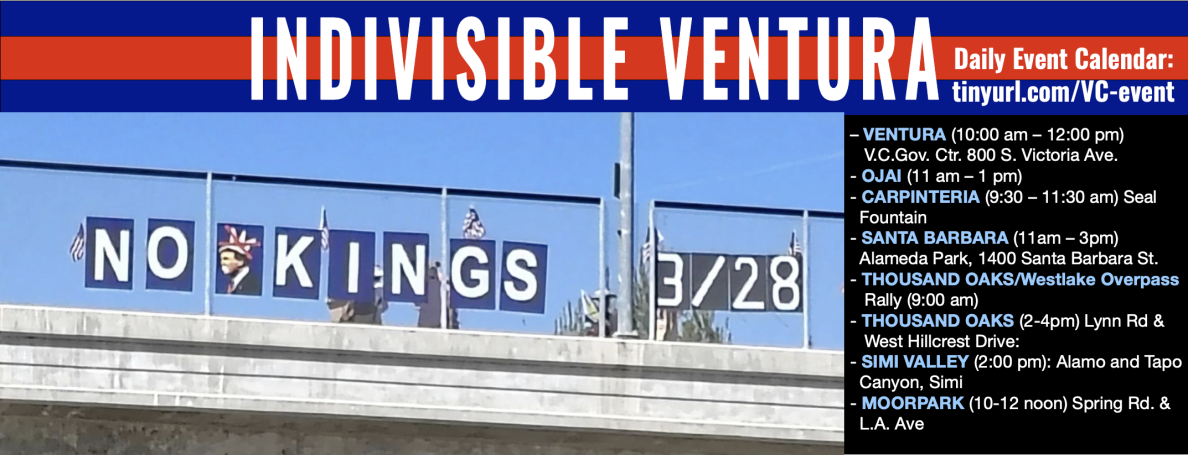
 INDIVISIBLE VENTURA